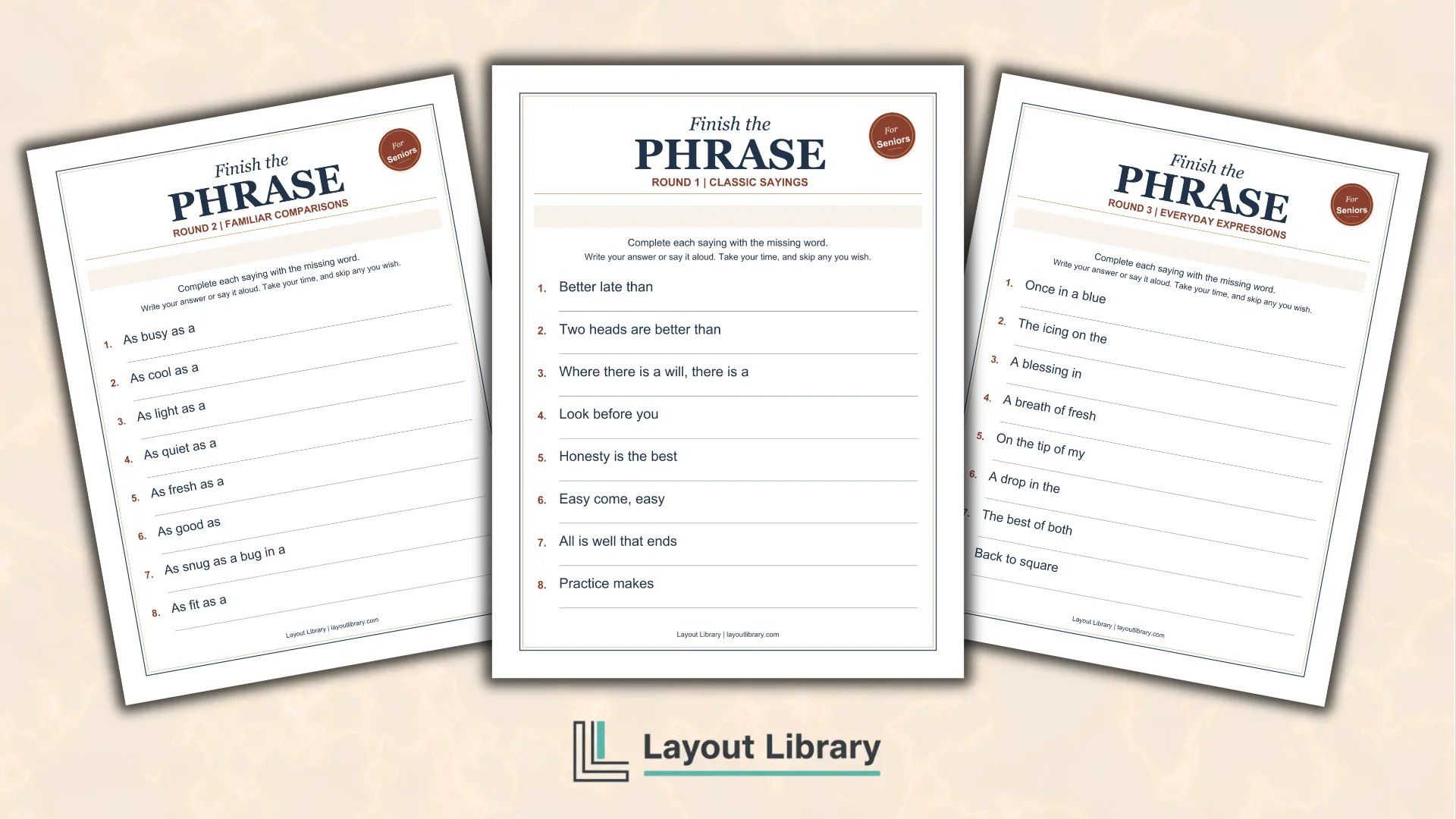
Start with “Better late than…” and someone may finish the saying before you reach for the answer key. Familiar expressions give this game a friendly starting point, whether you’re visiting a parent or planning an activity for a senior center.
This free finish the phrase printable for seniors includes 24 expressions across three themed rounds, plus a separate answer key. Each prompt is missing one word. Players can write on the answer lines, work with a partner, or call out the endings together.
Use one eight-question page for a short activity, or keep going while everyone is enjoying it. There’s no timer to watch and no need to turn it into a competition. A saying that brings back a story is a good reason to pause.
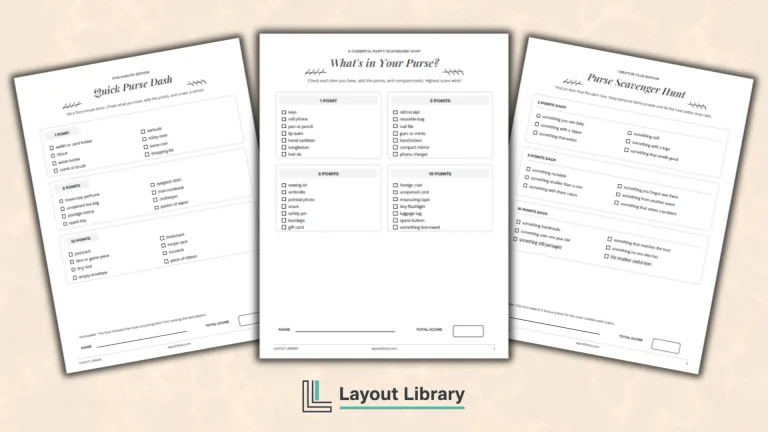
For another lighthearted group activity, our What’s in Your Purse game offers a different way to get people talking.
Printable Details
Title: Finish the Phrase. Used For: Senior center activities, family visits, community gatherings, small-group word games. Page Length: 5. Paper Size: 8.5 x 11 in (portrait). File Size: 133 KB. File Type: PDF. Color: Full Color. License: Personal, Educational & Business Use (No Resale or PDF Redistribution)
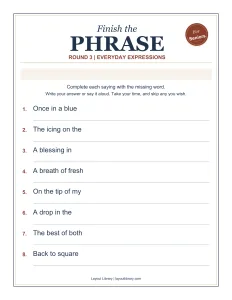
Complete 24 familiar sayings across three themed rounds, with eight prompts on each activity page.
Read comfortably with large activity text, clear numbering, and a separate writing line beneath every prompt.
Choose written answers or a read-aloud game to suit the people taking part in your gathering.
Keep the separate answer key with the host, then compare familiar endings together after each round.
Use one page for a short activity or spread all three rounds across several different visits.
Pick a Round: Sayings, Comparisons, or Everyday Expressions
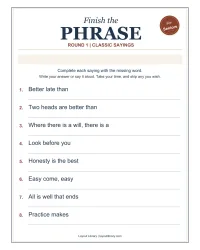
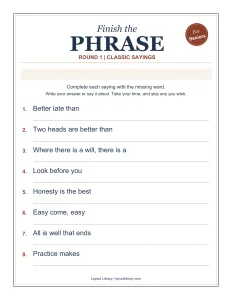
Classic Sayings features expressions such as “Better late than…” and “Look before you…” These short, familiar openings make a welcoming first round. If you’re introducing the game to a group, complete the first question together so everyone knows what to do.
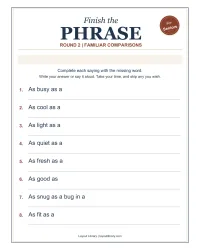
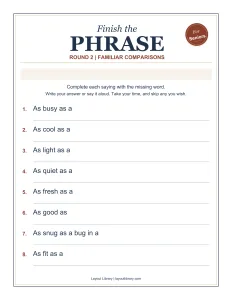
Familiar Comparisons follows a repeating pattern, with openings such as “As busy as a…” and “As cool as a…” Once players hear the pattern, they know what kind of ending to look for. Try this page when you want a round with a steady read-aloud rhythm.
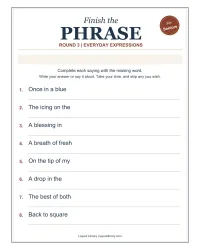
Everyday Expressions includes conversational phrases such as “Once in a blue…” and “The icing on the…” After checking an answer, invite someone to use the completed expression in a sentence. It’s a simple way to extend the activity without needing another worksheet.
The rounds are different themes rather than assigned difficulty levels. Start with whichever page seems most appealing to your group. You can use all three during one gathering, save a round for another day, or offer participants a choice of pages.
Play on Your Own or Team Up
Give each participant an activity page and a pen or pencil. Leave the answer key with the host so nobody sees the endings ahead of time. Read the short directions together, then let players work at a comfortable pace.
Each prompt has its own writing line underneath, so answers do not have to fit into a small blank within a sentence. The eight-question layout keeps the page manageable. Players can move past an unfamiliar expression and return to it after trying the others.
For a shared version, give each pair one page. Partners can discuss the endings, take turns writing, or have one person read while the other records their answers. This also works well during a family visit when you’d rather enjoy the game together than fill in separate sheets.
Read a Saying, Then Let the Conversation Follow
You only need one activity page and the answer key to lead an oral game. Read a prompt clearly, pause, and invite people to offer an ending. Repeat the opening if needed, and leave enough time for several people to join in.
For a group, read each opening once and give everyone a quiet moment to think before taking answers. Then invite responses around the table or let people volunteer. Anyone can pass, and an unfamiliar saying is a reason to offer a hint rather than hurry to the next question.
Try a follow-up question such as “Who used to say that in your family?” or “When would you use that expression?” A brief answer may lead to a story about a parent, a neighbor, or an old job. Leave room for those stories. You can always save the remaining questions for another visit.
Compare Answers and Welcome Familiar Variations
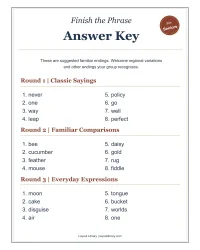
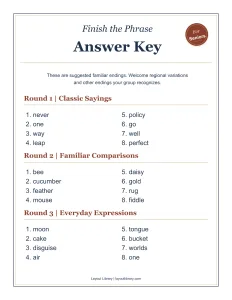
The fourth page groups the suggested endings by round and question number. Keep it nearby when hosting, or bring it out after a written round so participants can check their own responses.
Sayings sometimes vary between families and regions, so treat the key as a guide to familiar endings. If someone gives a different answer, ask them to say the whole expression. Comparing versions can be just as enjoyable as finding the word on the page.
If your group enjoys scoring, agree on the approach before starting. One point per recognized completion is a simple option. For a relaxed visit, skip scores entirely and use the pages as a reason to share expressions and stories.
Prepare Only the Pages You Need
The PDF contains three activity sheets, one answer key, and a final Usage & Printing Tips page. Print the selected activity pages for participants and a single answer key for the host. The reference page can stay with your activity supplies.
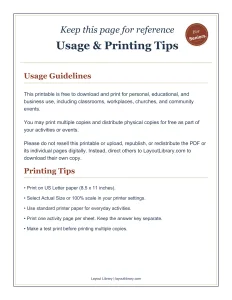
Use US Letter paper and select Actual Size or 100% scale. A single-sided layout keeps answers away from the back of a player’s worksheet. Make one test copy first to check the text and writing lines on your printer before preparing a larger group.
The navy headings, rust accents, and fine gold rules give the pages a warm stationery feel. The white background leaves the writing areas clear. If you choose grayscale printing, check your test copy to make sure the lighter answer lines remain visible.
FAQ
There are 24 prompts, divided evenly across Classic Sayings, Familiar Comparisons, and Everyday Expressions. Every prompt asks for one missing word, and the separate answer page provides suggested endings for all three rounds.
No. Participants can write, work with a partner, or answer aloud while someone hosts. The same printed prompts support each approach, so you can choose the format that suits your gathering without preparing a second activity.
Yes. Each activity page works on its own and includes its own directions. Use eight questions for a shorter visit, then keep the other rounds for another occasion. There is no requirement to complete the whole set at once.