Reading notes becomes easier when learners can practice one symbol at a time.
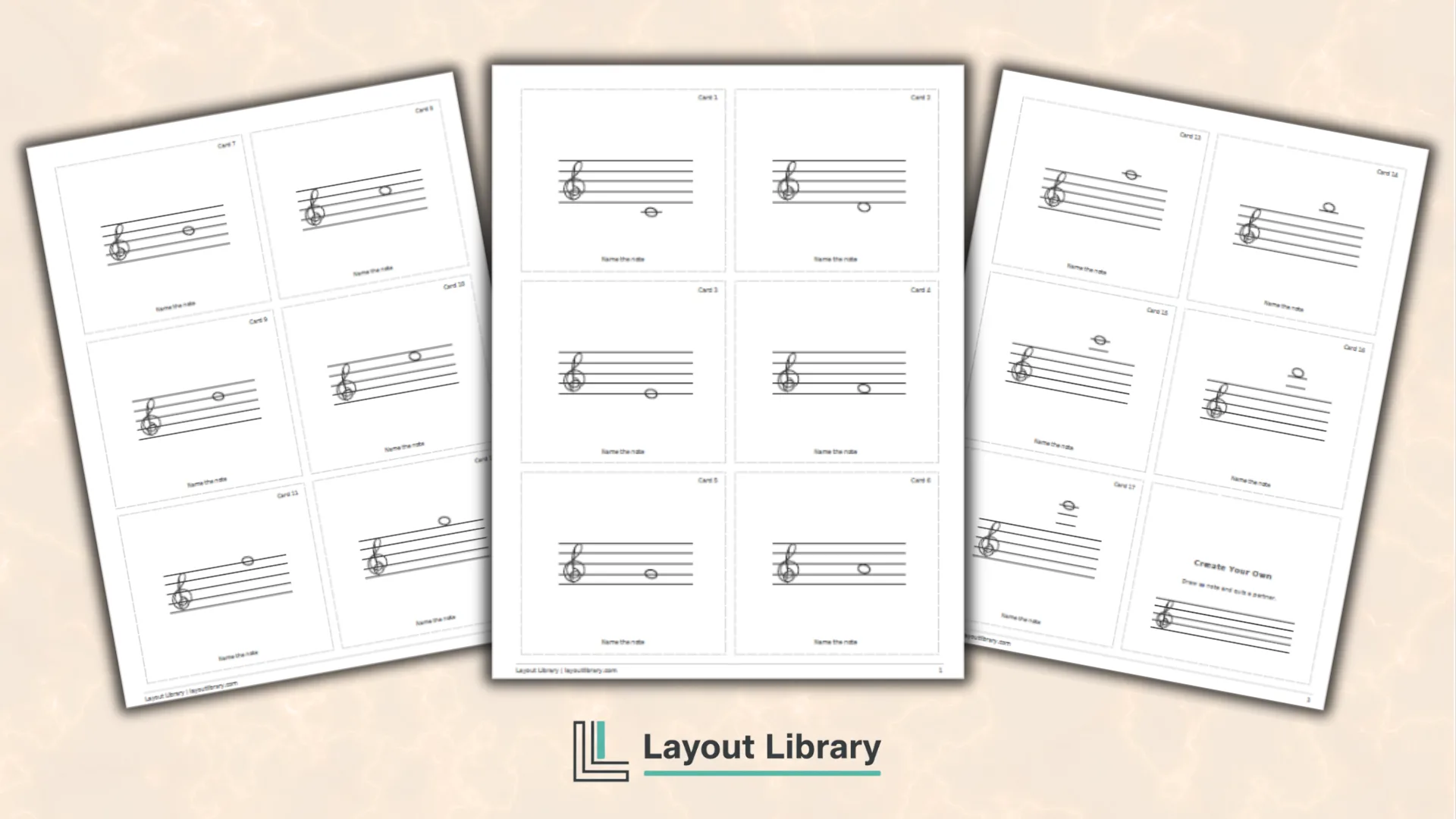
These printable treble clef flash cards turn the staff into a hands-on study tool for music lessons, homeschool activities, classroom review, or independent practice.
Each card presents a single note clearly, without extra visual distractions. They also give learners a way to notice patterns as notes move between lines, spaces, and ledger lines.
Printable Details
Title: Treble Clef Flash Cards. Used For: Music lessons, note-reading drills, sight-reading warmups, homeschool music, classroom games, independent practice. Page Length: 5 pages. Paper Size: 8.5 × 11 in (portrait). File Size: 51 KB. File Type: PDF. Color: Black & White. License: Personal Use.
Practice 17 treble-clef notes from middle C through E6 in a clear, progressive sequence.
Cut six roomy cards from each practice page using the light dashed borders as guides.
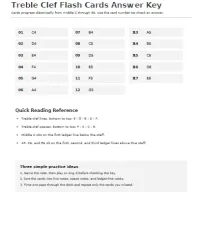
Check every response quickly with numbered cards and a complete one-page answer key.
Review staff lines, spaces, and ledger-line positions without relying only on memorized sayings.
Use the blank bonus card to create custom notes, challenges, or student-made quiz prompts.
Turn individual cards into timed drills, sorting activities, matching games, or instrument practice cues.
Save printer ink with a clean black-and-white layout designed for paper or lightweight cardstock.
What’s Included in These Treble Clef Flash Cards?
The first three pages contain the cut-apart cards. Seventeen cards show individual notes arranged in ascending order from C4 to E6.
The eighteenth space is a create-your-own card with a blank staff, giving teachers and learners room to add another note or invent a challenge.
This range includes every line and space note on the treble staff, plus useful ledger-line notes below and above it. Beginning learners can start with the central cards, while students who are ready for a wider range can gradually add the outer notes.
The fourth page provides the complete numbered answer key. It also summarizes the line notes, space notes, middle C position, and upper ledger-line locations.
Three practice ideas help turn the cards into repeatable exercises instead of a one-time worksheet.
The fifth page keeps printing guidance, personal-use terms, and major notation sources separate, leaving the study cards uncluttered and focused during practice.
How to Prepare the Printable Flash Cards
Print the pages at 100% or Actual Size on US Letter paper. Regular printer paper works for temporary practice.
Lightweight cardstock produces sturdier cards that are easier to shuffle, hold up, and reuse during lessons.
Cut along the light dashed border surrounding each card. A paper trimmer gives the straightest edges, but scissors also work.
Keep the answer key as a full page so card numbers remain easy to compare after the practice cards have been mixed.
Ways to Practice Treble Clef Note Recognition
Begin with a small group of three to five cards. Ask the learner to name each note without counting every staff line.
Add new cards only after the first group feels familiar. This keeps the activity challenging without making early practice overwhelming.
For a speed drill, shuffle the deck and name as many notes as possible in thirty seconds. Set aside missed cards, review them slowly, and repeat the short round. Tracking correct answers rather than only total speed keeps the focus on accurate recognition.
The cards also work as playing or singing cues. Draw one card, name the note, then locate it on a keyboard, instrument, or vocal exercise. This connects the printed symbol with its sound and physical position instead of treating notation as an isolated fact.
In a group, sort cards into line notes, space notes, and ledger-line notes. Students can race cooperatively, explain why a card belongs in its group, or arrange the complete deck from lowest to highest.
The blank card can become a teacher-selected bonus note or a student-created challenge.
Tips for Building Faster Note Reading
Mnemonics such as E-G-B-D-F for the lines and F-A-C-E for the spaces can help learners begin.
The longer-term goal is instant recognition, so gradually encourage students to identify each note directly instead of reciting the full sequence every time.
Short, frequent sessions usually feel more manageable than an occasional long drill. Five focused minutes before instrument practice can reinforce note names while leaving plenty of energy for rhythm, technique, and music making.
FAQ
The 17 numbered cards cover every natural note from middle C, written as C4, through E6. This includes the main treble staff plus ledger-line notes below and above it.
Either works. Standard paper is suitable for quick practice, while lightweight cardstock is easier to handle and lasts longer. Lamination can make a frequently used classroom or lesson set more durable.
Start with three to five central staff notes, practice them in mixed order, and add new cards gradually. Use the card numbers and answer key for immediate feedback, then revisit missed notes in the next short session.