Revelation can feel intimidating because its visions, symbols, and competing interpretations create confusion.
This Revelation Bible Study offers a calmer starting point.
Seven sessions help you observe the text, trace themes, compare related passages, and reflect without forcing every debated detail into one system.
Printable Details
Title: Revelation Bible Study.
Used For: Personal Bible study, small groups, church classes, discussion, reflection, and sermon preparation.
Page Length: 9.
Paper Size: 8.5 × 11 in (portrait).
File Size: 59 KB.
File Type: PDF.
Color: Black & White.
License: Personal Use.
Image Gallery
At a Glance
A Structured Way to Study Revelation
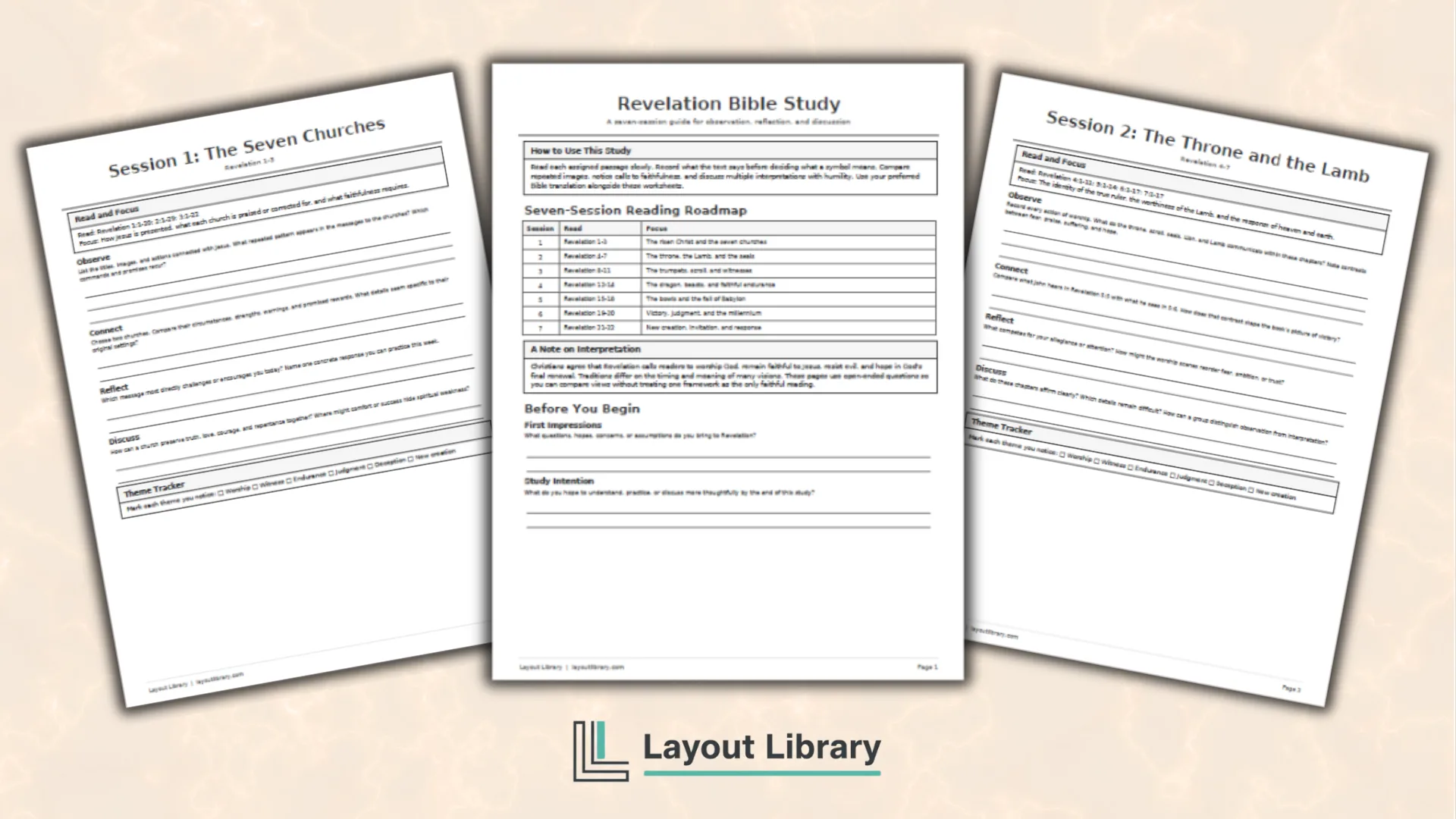
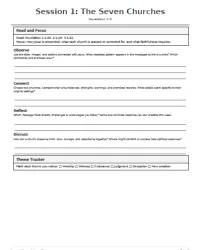
The study divides Revelation into seven manageable readings. Session one examines the risen Christ and the messages to the seven churches.
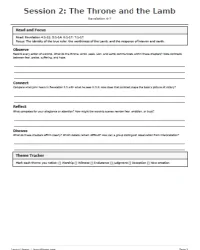
Later sessions move through the throne room, seals, trumpets, cosmic conflict, bowls, Babylon, final judgment, and the vision of new creation.
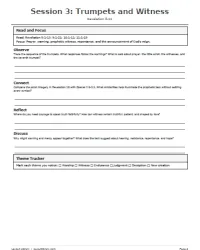
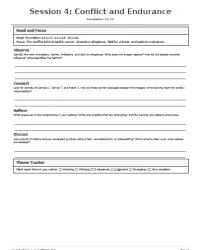
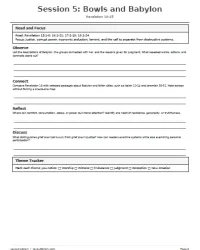
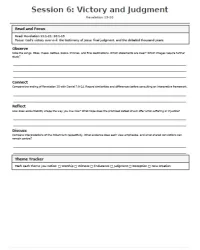
Each session uses the same four-part method. Observe asks what the passage actually says. Connect points toward related biblical imagery.
Reflect brings the reading into personal life. Discuss opens space for a group to compare insights, uncertainties, and possible applications.
That repeated structure keeps complex material approachable. Complete one session weekly, work at your own pace, or adapt individual pages for a teaching series.
What the Printable Includes
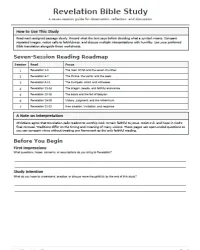
The opening roadmap explains the seven-session sequence and establishes an important interpretive boundary.
Christians share central convictions about worship, faithfulness, judgment, evil, and hope, while disagreeing about the timing or meaning of particular visions. The guide keeps those distinctions visible.
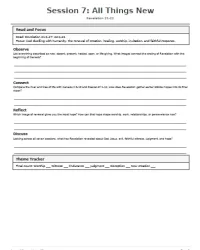
Seven worksheet pages then cover Revelation 1 through 22. Every page includes a defined reading range, a central focus, four guided prompts, writing space, and a recurring tracker for six major themes.
The last session also invites readers to review the entire book and count the themes they noticed.
The final page contains printing guidance, personal-use terms, an interpretive note, and major sources. Keep a preferred Bible translation available because full passages are not reproduced.
Reading Symbols With Care
Revelation presents revelation, prophecy, and a message to churches. Its symbolic visions draw from earlier biblical books.
Before linking an image to a modern person, nation, event, or technology, record its function within Revelation and where similar imagery appears elsewhere in Scripture.
The prompts encourage this patient approach. For example, readers compare Revelation’s scroll imagery with Ezekiel, its beasts and judgment scenes with Daniel, Babylon’s fall with Isaiah and Jeremiah, and the final river and tree of life with Genesis and Ezekiel.
This method separates direct observations from later conclusions. When a passage remains contested, compare responsible interpretations, notice each view’s evidence, and keep Revelation’s calls to worship and endurance central.
Ways to Use These Study Pages
For personal study, read the assigned chapters, then complete the prompts before consulting commentary. Afterward, compare your observations with trusted resources. This sequence supports direct reading alongside careful scholarship.
Small groups can assign the reading beforehand and begin with the Discuss prompt. Ask which conclusions come directly from the passage and which depend on an interpretive framework. This distinction can produce a more honest and more focused conversation.
Teachers and church leaders can also use individual sessions alongside sermons or classes. The worksheets provide structure without supplying fixed answers, so leaders can add their own denominational context while retaining the printable’s observation-first foundation.
Supplies You May Need
Affiliate disclosure: Some links below are affiliate links. If you make a purchase, Layout Library may earn a commission at no extra cost to you.

No-Bleed Bible Highlighters
Highlight important passages and color-code recurring themes such as worship, endurance, and new creation as you work through the study sessions.

Repositionable Page Tabs
Mark key passages and cross-references throughout your Bible so you can quickly return to them during each study session.

Three-Ring Binder
Keep your completed Revelation study worksheets, reflection notes, and theme trackers organized in one place for easy reference.
Printing and Setup Tips
Print the PDF on US Letter paper at Actual Size or 100 percent.
One-sided printing gives participants the most comfortable writing surface and makes it easy to bring selected pages to a class or group meeting.
Use a pencil or dark pen, keep your Bible nearby, and consider adding a notebook for questions that require more space.
If you study weekly, place the finished pages in a slim binder so earlier theme notes remain easy to review.