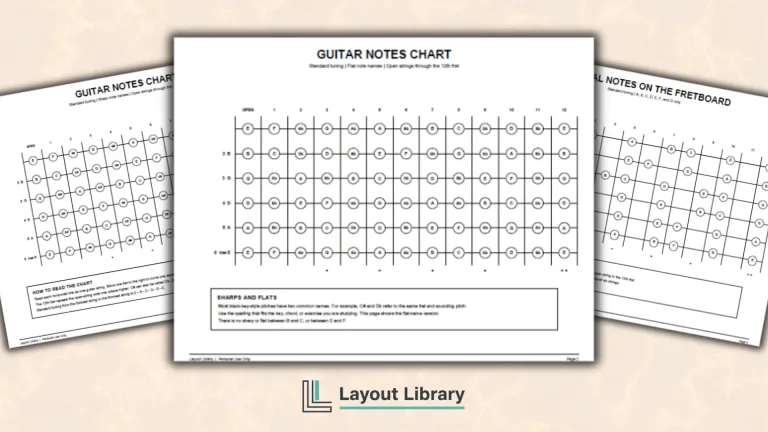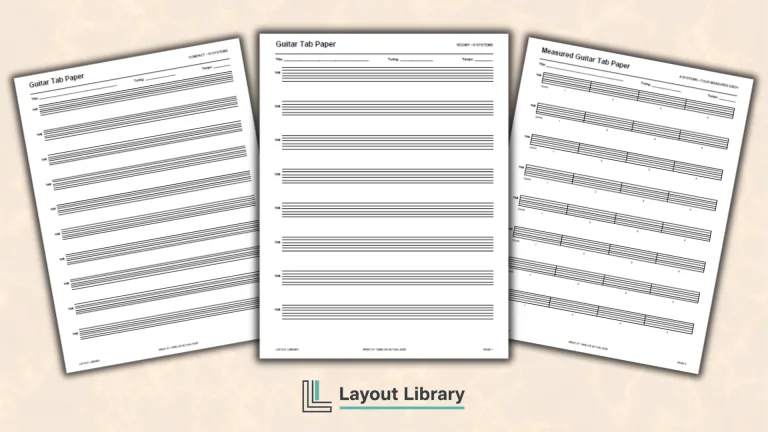
Writing chord shapes by hand makes guitar practice more active.
You can record a voicing, test your memory, organize a song, or create a custom lesson sheet.
This free printable blank guitar chord chart includes several layouts, so you can choose the amount of writing space that fits the job.
Printable Details
Title: Blank Guitar Chord Chart.
Included layouts: 12, 20, and 30 blank chord boxes, plus a song chord map.
Intended instrument: Standard six-string guitar.
Page Length: 5.
Paper Size: 8.5 × 11 in (portrait).
File Size: 15 KB.
File Type: PDF.
Color: Black & White.
License: Personal Use.
Image Gallery
At a Glance
Create Your Own Guitar Chord Reference
A blank chart works across genres, keys, and skill levels. Beginners can copy open chords and add finger numbers.
More experienced players can record movable shapes, inversions, and alternate voicings. Teachers can prepare custom exercises focused on the current lesson.
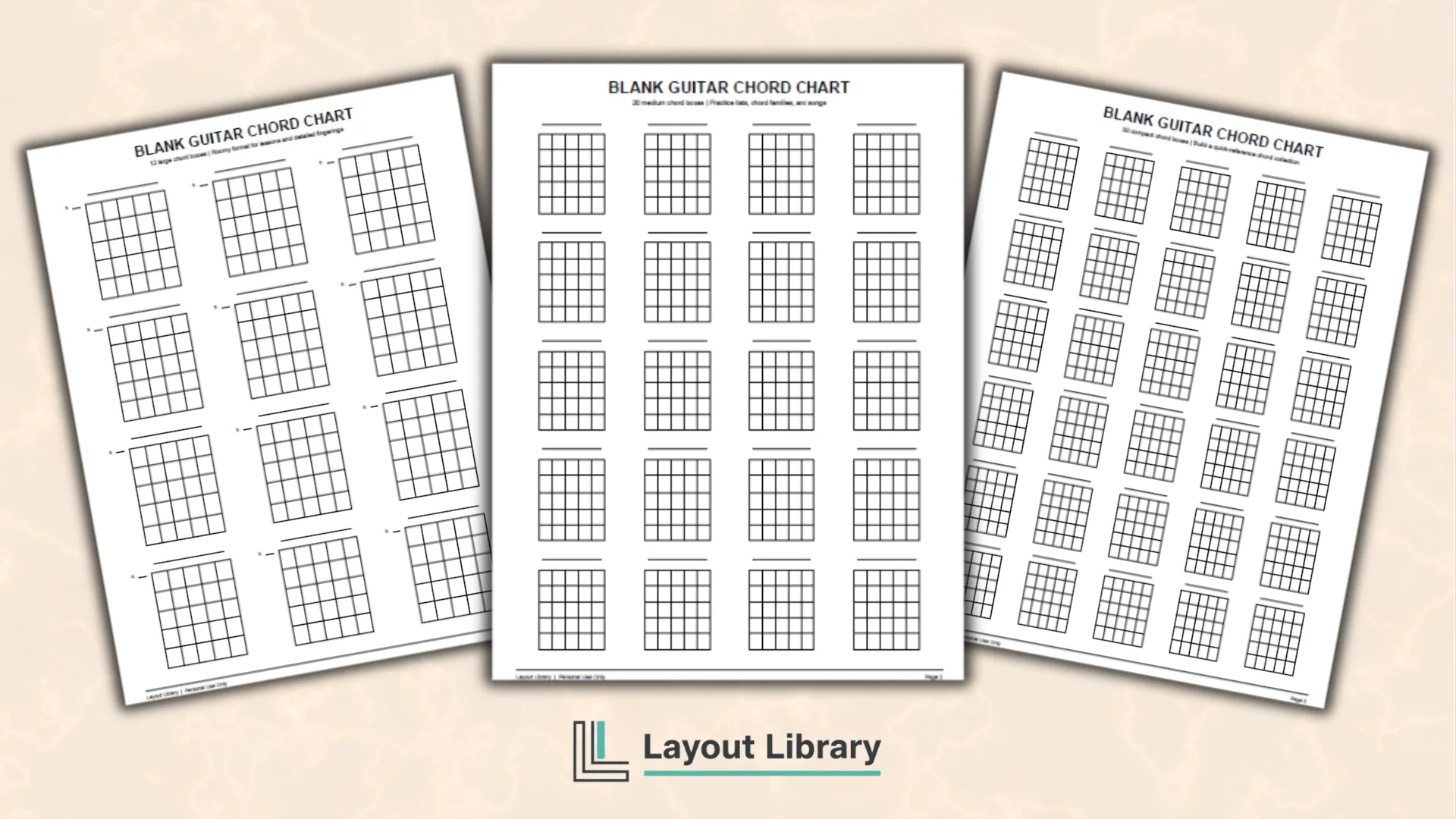
Each blank diagram uses the familiar six-string chord-box format. The six vertical lines represent the strings, with the low E string on the left and the high E string on the right.
The five spaces between the horizontal lines represent frets. A thicker top line represents the nut when a shape is played in open position.
What’s Included
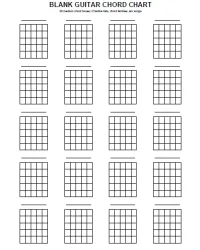
The first page has 12 large boxes with room for starting-fret notes, detailed fingerings, and teacher demonstrations.
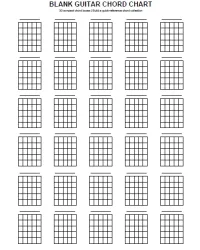
The second page has 20 medium boxes for chord families, progressions, repertoire lists, or songs.
The third page has 30 compact boxes for personal references, larger voicing collections, or memory quizzes.
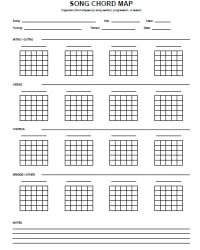
The fourth page is a song chord map with song details and separate areas for the intro or outro, verse, chorus, and bridge.
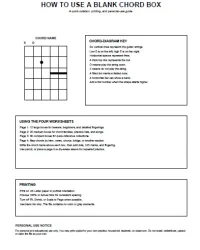
The fifth page explains common chord-diagram notation, printing settings, and personal-use terms.
How to Mark a Blank Guitar Chord Diagram
Write the chord name on the line above the box. Add a filled dot where a finger presses a string.
You can write a finger number inside or beside the dot when that detail is useful. Place an O above a string that should ring open and an X above a string that should not be played.
For a barre chord, draw a horizontal bar across the strings held by one finger. If the chord shape begins above the first fret, add the starting fret number beside the diagram.
These simple markings turn an empty box into a quick visual reminder that is easy to review during practice.
Printing Tips
Download the PDF and open it in a PDF reader. Choose US Letter paper and portrait orientation. Print at 100% or Actual Size for the most consistent spacing.
The chart does not require color ink, so black-only or grayscale printer settings are appropriate.
For repeated use, print on heavier paper or place a page in a clear dry-erase sleeve.