Young children often learn new vocabulary more easily when they can connect a word with a clear picture and physical movement.
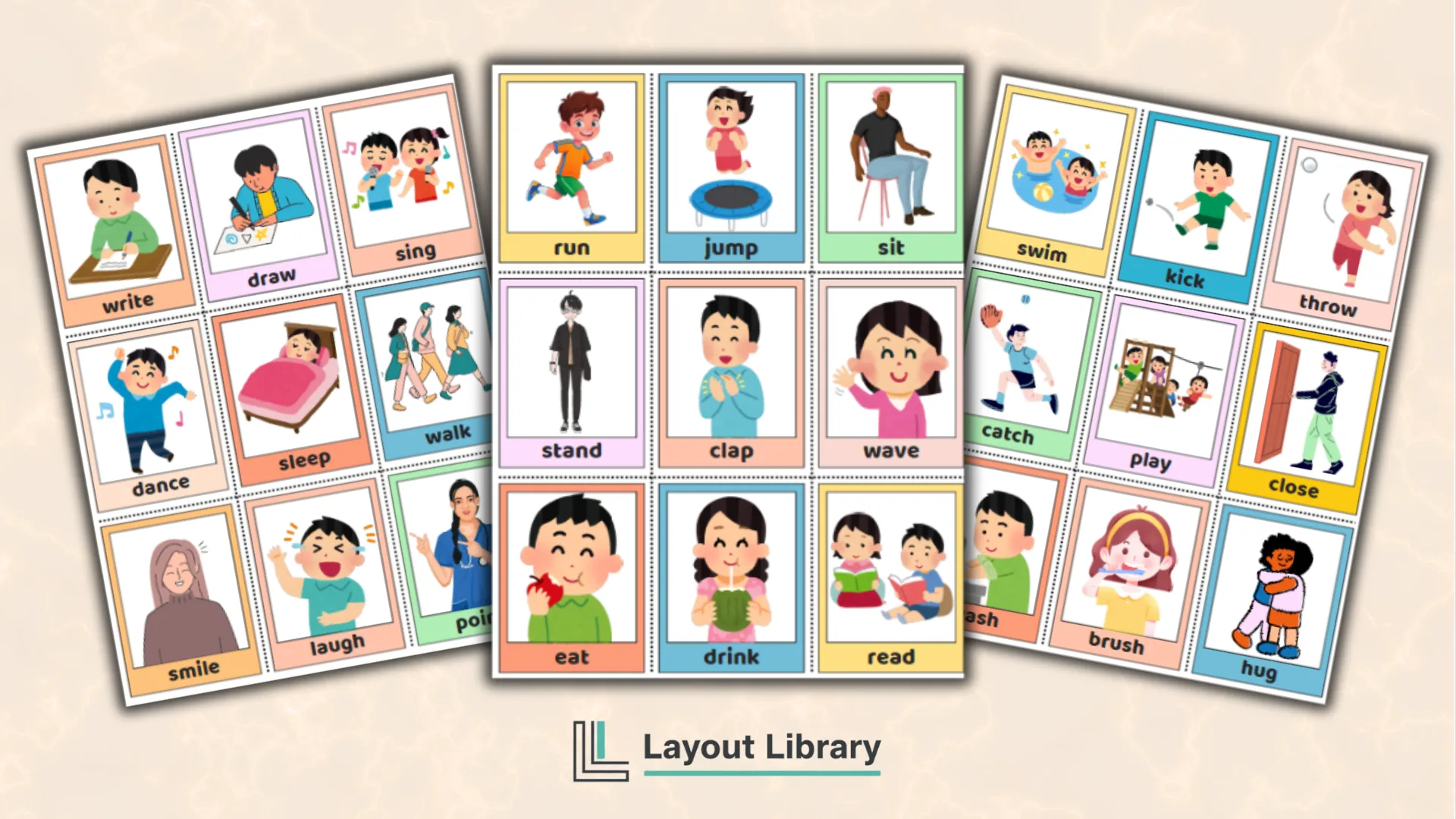
These free printable action words flash cards give preschool and kindergarten learners 27 common verbs to recognize, say, demonstrate, and use in simple sentences.
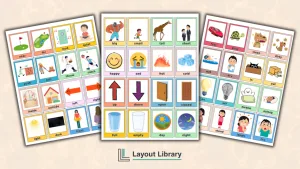
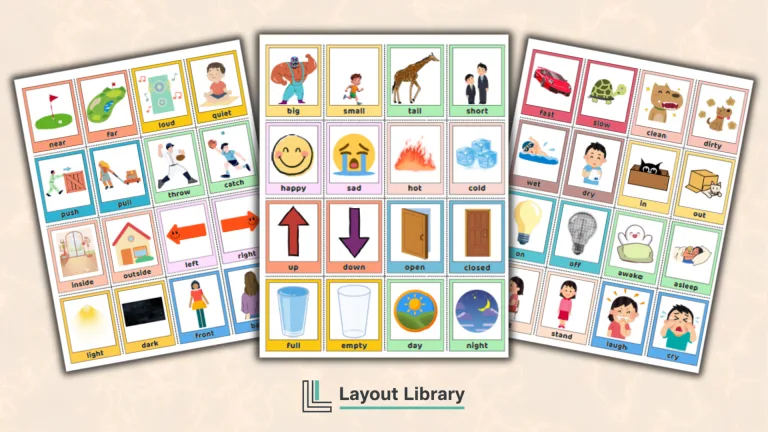
Each card includes one lowercase action word and a colorful illustration showing what the word means.
The cards are arranged nine per page with dotted cutting lines, making the set easy to prepare for classroom lessons, homeschool activities, literacy centers, or vocabulary practice at home.
Printable Details
Title: Action Words Flash Cards. Used For: Teaching basic verbs, building vocabulary, supporting word recognition, and encouraging movement-based learning. Page Length: 3. Paper Size: 8.5 × 11 in (portrait). File Size: 6 MB. File Type: PDF. Color: RGB. License: Personal, classroom, and homeschool use.
Introduce three to five cards at a time before using the full set.
Invite children to act out each verb after naming the picture.
Use the cards for quick movement breaks between seated activities.
Sort the words into groups such as active, quiet, indoor, or outdoor actions.
Practice short sentences once the child recognizes each word.
Print on cardstock or laminate the cards for repeated use.
Store the finished cards in an envelope, binder pouch, or small container.
Overview
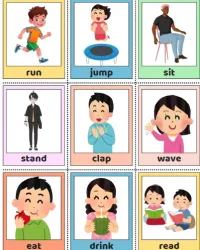
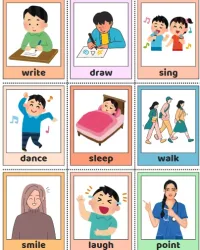
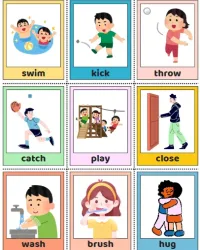
The printable includes three pages of illustrated flash cards and one disclaimer page. Each flash-card page contains nine cards in a three-by-three grid.
The complete set includes these 27 action words:
run, jump, sit, stand, clap, wave, eat, drink, read, write, draw, sing, dance, sleep, walk, smile, laugh, point, swim, kick, throw, catch, play, close, wash, brush, and hug.
The words are written in lowercase using a large, bold font. This makes the cards suitable for early learners who are beginning to connect spoken words with printed text.
Each illustration gives children a visual clue about the meaning of the verb. The set includes familiar movements, school-related activities, daily routines, expressions, and social actions. Colorful borders help separate the cards while keeping the overall design consistent.
Dotted lines between the cards provide a clear cutting guide. The fourth page explains the permitted personal, classroom, and homeschool uses of the printable.
How to Prepare the Flash Cards
Download the PDF and print the first three pages on standard U.S. Letter paper. Regular printer paper is fine for occasional practice, but cardstock will make the cards sturdier and easier for young children to handle.
Cut along the dotted lines to separate the cards. An adult should prepare the set for preschoolers or supervise children who are practicing their cutting skills.
For a longer-lasting set, laminate the pages before cutting. You can also use self-adhesive laminating sheets or place individual cards inside clear sleeves.
Once prepared, keep the cards together in a labeled envelope, small box, zippered pouch, or binder pocket.
Ways to Use These Action Words Flash Cards
Start with a simple identification activity. Hold up one card and ask, “What is this person doing?” Give the child time to study the picture before saying the word together.
You can then invite the child to perform the action. Cards such as run, jump, clap, wave, dance, kick, and hug work especially well for active practice.
For a matching game, place several cards face up. Say one verb aloud and ask the child to point to or pick up the matching picture. Begin with two or three options, then increase the number of cards as confidence grows.
The cards can also be used for action charades. One player chooses a card and acts out the verb without saying it. The other players try to guess the action.
For sentence practice, place a card inside a simple sentence frame:
I can jump.
We read books.
I wash my hands.
They play outside.
I brush my teeth.
Another option is to sort the cards into categories. Children might group together actions performed at school, actions involving movement, quiet activities, or daily routines.
Tips for Preschool and Kindergarten Learning
Avoid introducing all 27 cards at once. A smaller group makes it easier for children to focus, remember the words, and feel successful.
Begin with familiar verbs such as sit, eat, read, sleep, and walk. Add more words once the child can recognize and name the first group consistently.
Encourage children to say each word aloud. Repeating the word while looking at the image and performing the action can strengthen the connection between meaning, speech, movement, and print.
Keep learning sessions short and playful. A few minutes of focused practice can be more effective than trying to complete a long lesson.
You can also revisit the same cards over several days. Repetition helps early learners build confidence and remember vocabulary.
FAQ
The cards are designed primarily for preschool and kindergarten learners. They may also help older children who need additional practice with basic verbs or English vocabulary.
The printable contains 27 illustrated action word cards arranged nine per page across three pages.
Yes. The original downloader may print copies for personal, classroom, and homeschool use. The digital PDF may not be redistributed, uploaded, or shared with others.