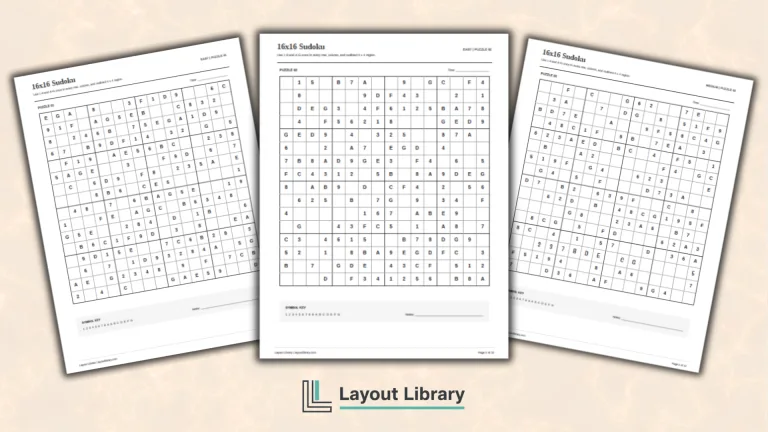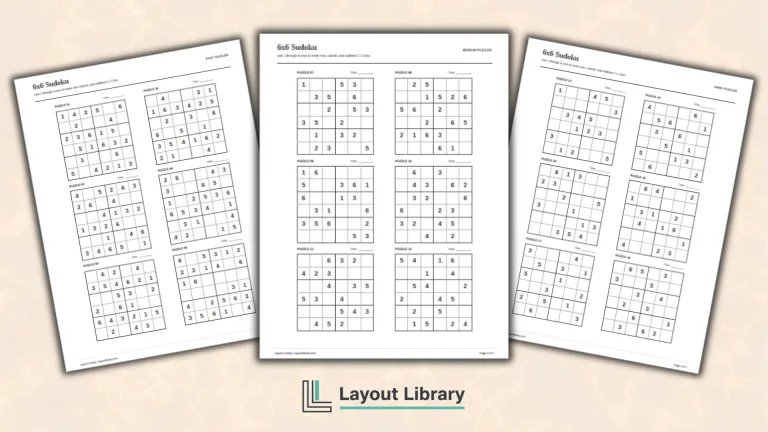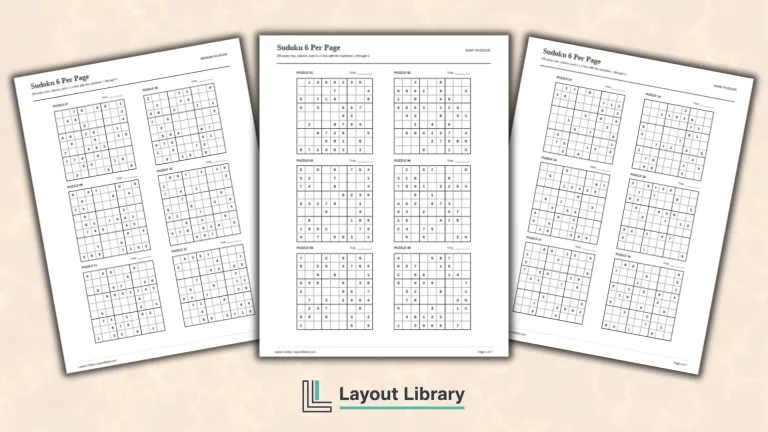
Learning Sudoku feels much easier when the first grid is small, clear, and inviting.
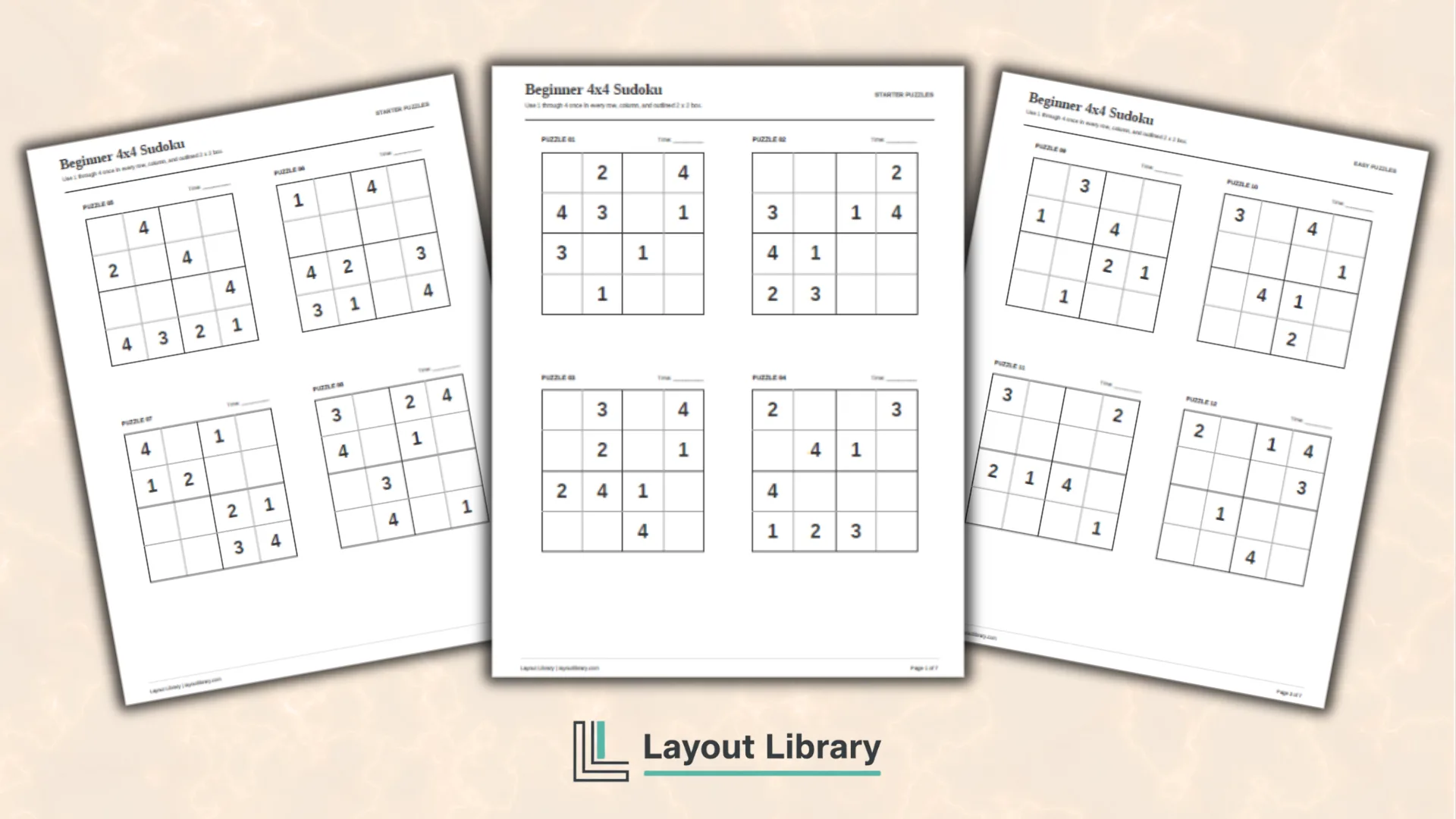
This free printable beginner 4×4 Sudoku packet introduces the basic rules without the visual overload of a standard 9×9 puzzle.
Each grid has only 16 cells, so new solvers can focus on one logical choice at a time and build confidence quickly.
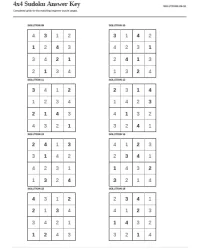
The packet includes 16 original puzzles with a gentle progression from Starter to Easy. Large grids leave plenty of room for writing, while matching answer keys make it simple to check each completed puzzle.
Use the pages at home, in a classroom, during tutoring, or as a quiet screen-free activity.
Printable Details
Title: Beginner 4×4 Sudoku.
Included: 16 puzzles, 16 solutions, and one instructions and personal-use page.
Difficulty: Eight Starter puzzles and eight Easy puzzles.
Page Length: 6.
Paper Size: 8.5 × 11 in (portrait).
File Size: 73 KB.
File Type: PDF.
Color: Black & White.
License: Personal Use.
Image Gallery
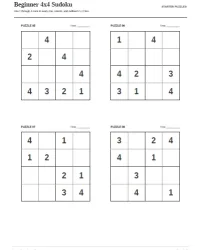
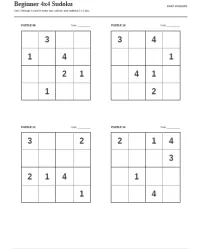
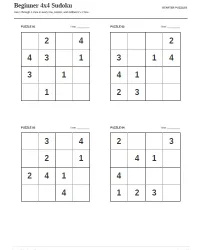
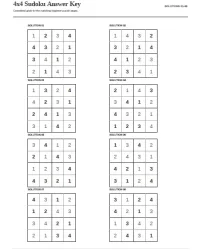
At a Glance
What Is 4×4 Sudoku? How It Works
A 4×4 Sudoku is a simplified form of the familiar number-placement puzzle.
Instead of nine rows, nine columns, and the numbers 1 through 9, each puzzle uses four rows, four columns, and the numbers 1 through 4.
The completed grid must contain each number once in every horizontal row. Each number must also appear once in every vertical column. Finally, every heavily outlined 2×2 box must contain 1, 2, 3, and 4 without repetition.
Sudoku does not require addition, subtraction, or other arithmetic. The numbers act as symbols. Solvers use observation and elimination to decide which symbol belongs in each blank cell.
The smaller format makes those relationships easier to see, which is why 4×4 puzzles work well as a first introduction.
What’s Included
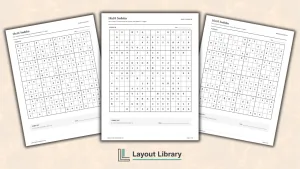
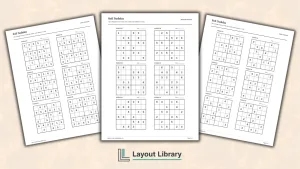
Pages 1 through 4 contain four large puzzles each. The first eight are labeled Starter and provide more beginning clues.
The next eight are labeled Easy and include slightly more open space while remaining approachable for first-time solvers.
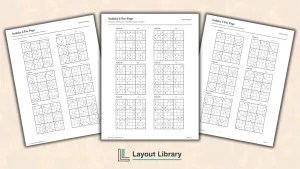
Pages 5 and 6 contain the completed answer grids. Original clues remain dark and bold, while added answers appear in softer gray. This distinction helps a solver compare the answer key with the original puzzle and identify where an incorrect choice began.
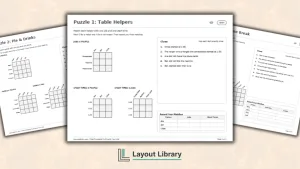
Page 7 explains the rules, recommended print settings, and personal-use terms. Each puzzle was also checked to ensure it can be completed with beginner-friendly single-candidate steps.
Tips to Solve a Beginner 4×4 Sudoku
Begin with a row, column, or outlined box that already contains three numbers. Only one number from 1 through 4 is missing, so the blank square can be filled immediately.
Next, scan the connected row and column. If a blank cell could hold more than one number, leave it temporarily and find another area with a certain answer. Each correct placement often reveals the next move.
Encourage new solvers to check three things before writing a number: the row, the column, and the 2×2 box. A number is correct only when it does not repeat in any of those areas.
A pencil is helpful because it keeps the activity relaxed while the solver learns the pattern.
Ideas for Home and Classroom Use
These puzzles can serve as morning work, an early-finisher option, a tutoring activity, a travel game, or a quiet brain break.
For a first lesson, solve Puzzle 01 together and say the reasoning aloud. Ask which number is missing from a nearly completed row, then check its column and box.
After that demonstration, let the learner attempt the next puzzle independently.