Sixth-grade spelling practice often moves beyond memorizing basic words.
Students begin working with prefixes, suffixes, silent letters, commonly confused words, academic vocabulary, and terms used across subjects such as science, math, geography, and writing.
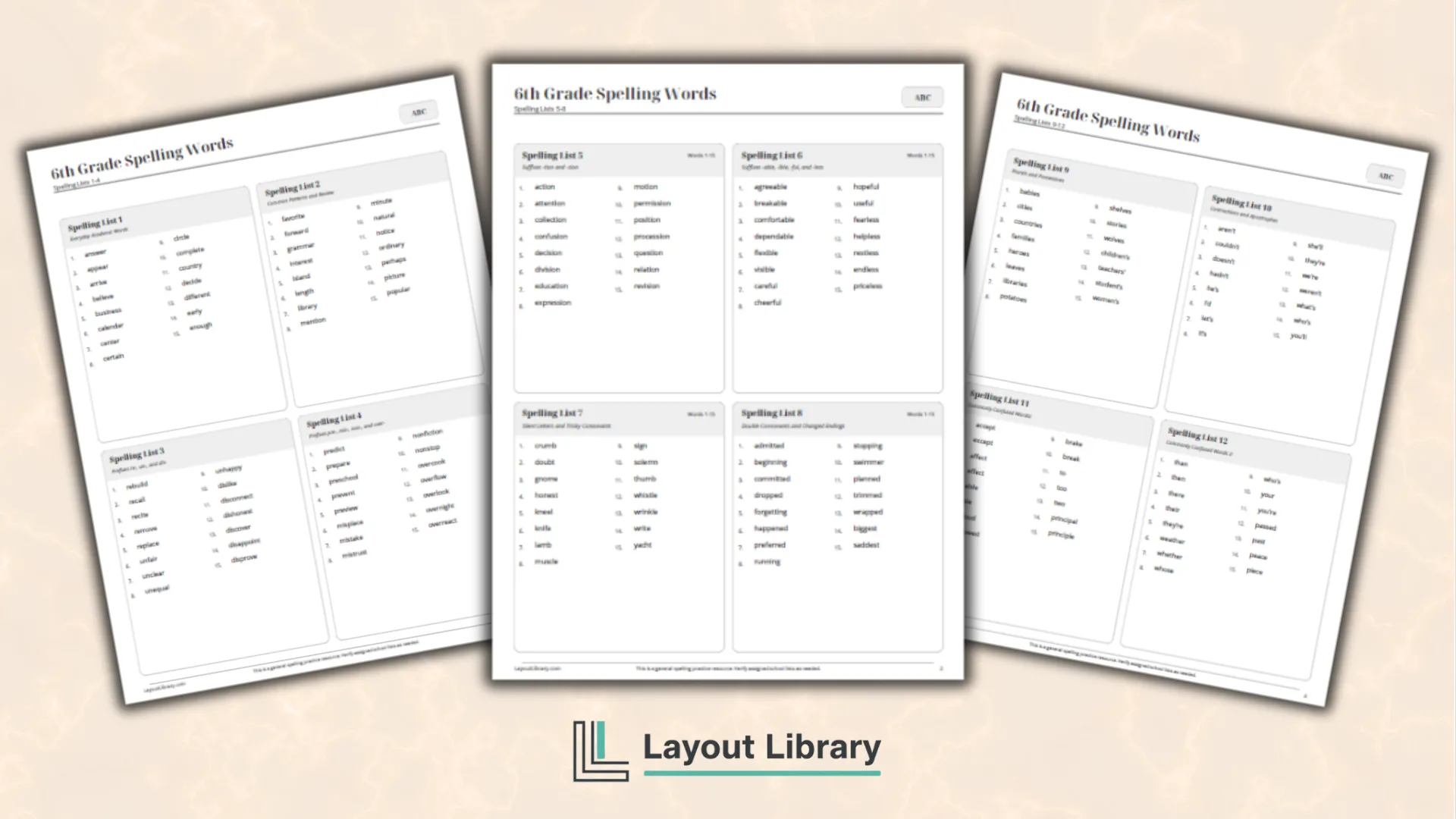
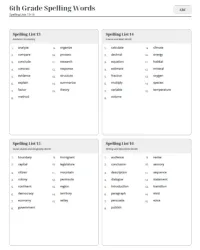
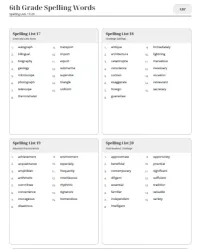
This free printable 6th-grade spelling words PDF provides 300 words divided into 20 manageable lists.
It also includes reusable pages for personal word lists, deeper word study, and spelling tests, giving teachers and homeschool families several ways to adapt the resource to individual learning needs.
Printable Details
Title: 6th Grade Spelling Words. Used For: Spelling practice, vocabulary development, weekly word lists, quizzes, review, and independent word study. Page Length: 8. Paper Size: 8.5 × 11 in (portrait). File Size: 953 KB. File Type: PDF. Color: Black & White. License: Personal, classroom, and homeschool use.
Choose from 20 ready-to-use lists containing 15 words each.
Assign the lists in order for a gradual increase in difficulty, or select them by skill.
Pair the provided words with your existing language arts lessons.
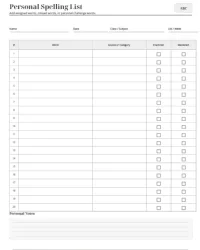
Use the personal list for missed words, subject vocabulary, or individual challenges.
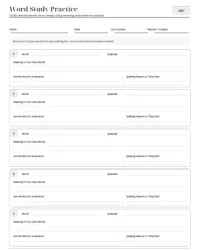
Encourage students to explore meanings and sentences with the word study page.
Print additional test pages for weekly quizzes or informal assessments.
Review your school’s assigned curriculum because spelling expectations can vary.
Overview
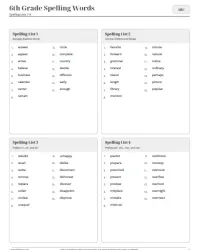
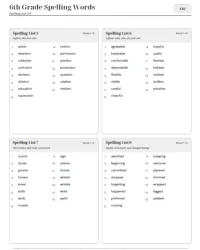
The first five pages contain 300 sixth-grade spelling words arranged into 20 separate lists.
Each list includes 15 words, and the numbering restarts at one so teachers can assign individual lists without adjusting the numbers.
The lists combine spelling patterns with useful academic and subject-area vocabulary. Early sections review words such as answer, believe, calendar, grammar, library, and ordinary.
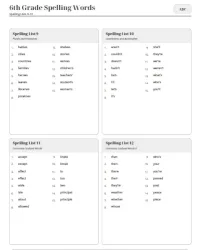
Students then move into words organized around prefixes, suffixes, silent letters, double consonants, changed endings, plurals, possessives, and apostrophes.
Two lists focus on commonly confused words. These include pairs and groups such as:
Accept and except.
Affect and effect.
Aisle and isle.
Aloud and allowed.
Principal and principle.
There, their, and they’re.
Weather and whether.
Your and you’re.
Later lists introduce academic terms such as analyze, compare, evidence, method, research, structure, and summarize. Additional sections include vocabulary connected to science, mathematics, social studies, geography, and writing.
The final lists contain Greek and Latin roots, advanced practice words, and more challenging spellings such as architecture, conscience, exaggerate, necessary, achievement, acquaintance, environment, rhythmic, beneficial, and significant.
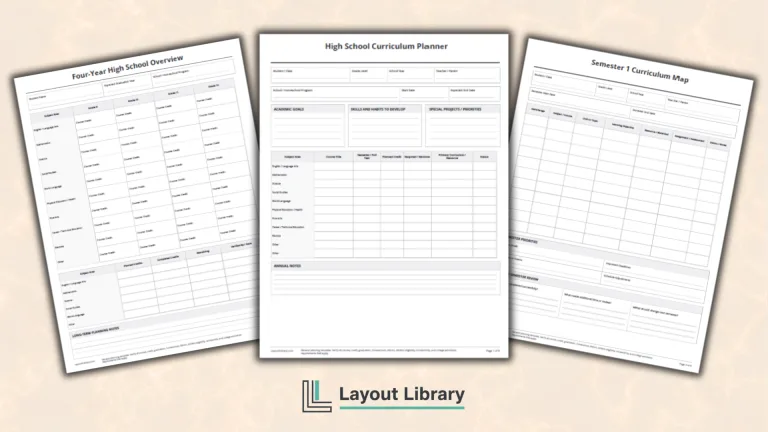
Page six is a reusable Personal Spelling List with space for 20 custom words. Page seven provides a Word Study Practice worksheet for five selected words.
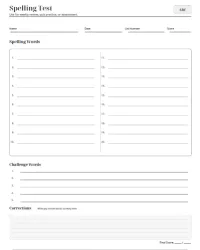
Page eight is a spelling test with 20 standard response lines, five challenge-word lines, and a corrections section. The final page contains the educational and license notice.
How to Use the Spelling Lists
You can assign one list at a time, combine several shorter lists, or select a group that supports a current lesson. The lists do not have to be completed in a strict weekly sequence.
Begin by asking students to read through the assigned words and identify anything unfamiliar. They can circle difficult sections, underline prefixes or suffixes, and look for repeated spelling patterns.
A simple practice routine might include:
Read each word aloud.
Copy each word carefully.
Cover the list and attempt to spell the words from memory.
Check the attempts against the printable.
Practice the missed words again.
Use selected words in original sentences.
The Personal Spelling List can be used for words missed on previous tests, vocabulary found during reading, subject-specific terms, or individual challenge words. Students can mark when each word has been practiced and mastered.
Using the Word Study Practice Page
The Word Study Practice page adds more depth than repeated copying alone.
Students choose five words and record the syllables, meaning in their own words, an example sentence, and the spelling feature or difficult section they need to remember.
For example, a student working with disappear might identify the prefix dis- and notice that the base word appear keeps its double p.
Encourage students to use a trusted dictionary when they do not recognize a word. Writing definitions in their own words can help confirm that they understand the term rather than simply copying it.
The sentence field also gives students practice using vocabulary in context. Ask them to create sentences that clearly demonstrate the meaning of each word.
Tips for Sixth-Grade Spelling Practice
Focus additional time on patterns rather than treating every spelling as an isolated fact. Prefixes, suffixes, roots, syllables, and word families can help students approach unfamiliar words more confidently.
Short, repeated study sessions are generally easier to manage than one long review immediately before a test. Students can practice a few words each day and revisit the most difficult ones throughout the week.
Use the test page for formal quizzes, partner practice, or self-checking. Afterward, have students rewrite missed words in the corrections section and add persistent trouble words to their personal list.
Disclaimer: As far as we are aware, there is no single spelling list used by every sixth-grade classroom or homeschool program. This printable is a general practice resource, not an official curriculum or guaranteed match for a particular school, textbook, or state standard.
FAQ
The printable contains 300 words divided into 20 spelling lists, with 15 words in each list.
The main lists contain words only. A reusable Word Study Practice page allows students to record meanings in their own words and write example sentences for selected words.
Yes. The original downloader may print copies for personal, classroom, and homeschool use. The digital PDF may not be sold, uploaded, redistributed, or shared with others.