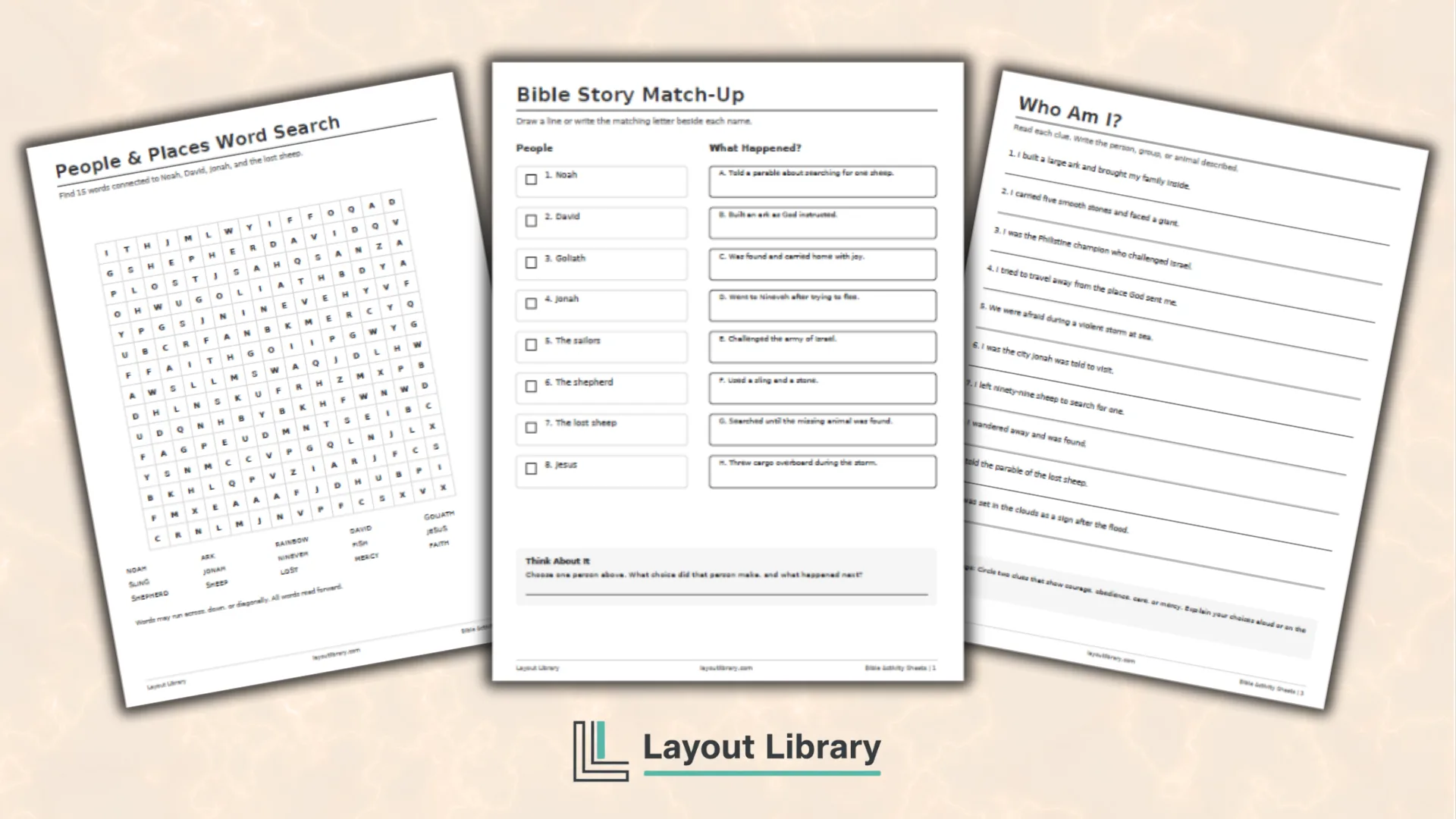
Make Bible learning active and easy to prepare with these free printable Bible activity sheets.
The set combines familiar stories, age-friendly puzzles, sequencing practice, and a reusable study page. Children can work independently, with a partner, or alongside an adult.
The activities focus on Noah, David and Goliath, Jonah, and Jesus’ parable of the lost sheep. Learners get a useful variety while noticing important people, places, choices, and events across four well-known biblical accounts.
Printable Details
Title: Bible Activity Sheets. Used For: Sunday school, homeschooling, family Bible study, children’s church, classrooms. Page Length: 7. Paper Size: 8.5 × 11 in (portrait). File Size: 55 KB. File Type: PDF. Color: Black & White. License: Personal Use.
Five varied activity pages keep Bible learning engaging without requiring elaborate supplies or preparation.
Familiar stories help children practice recalling people, places, actions, and the order of important events.
A fifteen-word search adds quiet independent practice for early finishers, travel, or children’s church.
Ten Who Am I clues encourage learners to connect story details to the correct person or object.
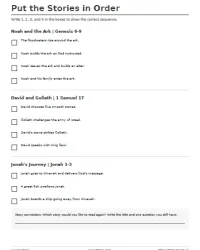
Three sequencing challenges strengthen reading comprehension by asking children to arrange events in logical order.
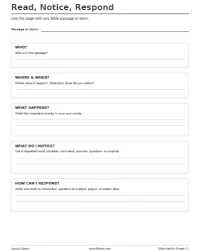
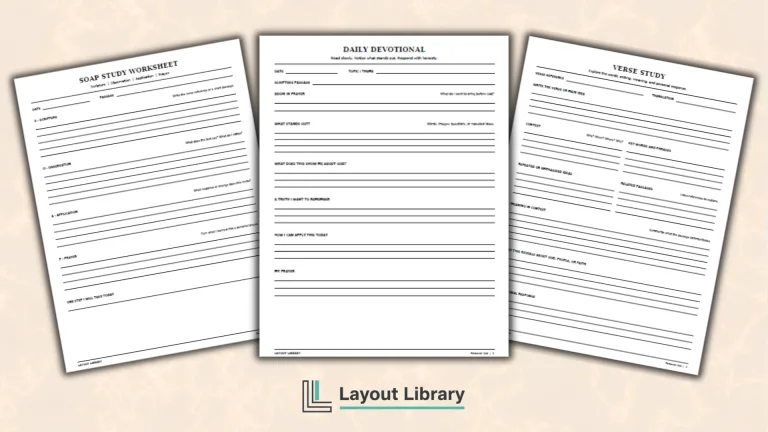
A reusable observation sheet guides children from reading a passage toward noticing, reflecting, and responding.
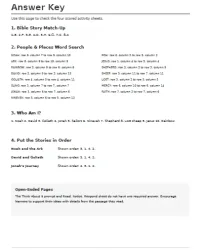
The complete answer key makes review quick for parents, teachers, ministry volunteers, and homeschool families.
A Varied Set of Bible Activities
This printable uses several worksheet styles to engage different skills.
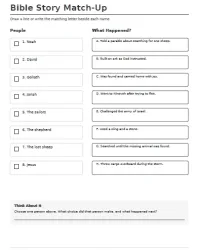
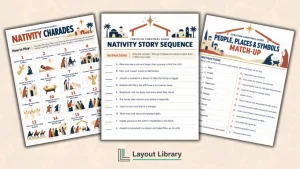
The story match-up page asks children to connect eight people or groups with a related action. It works well as a lesson review, partner activity, or introduction.
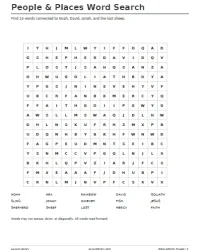
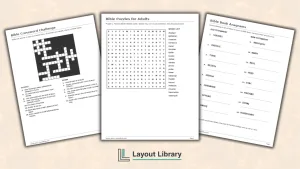
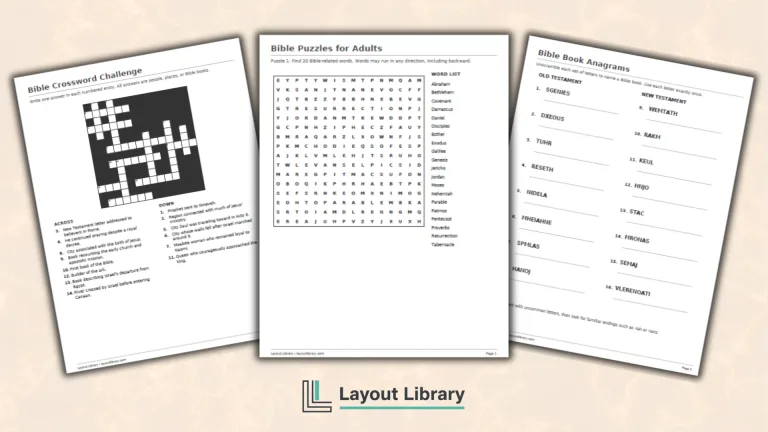
The people-and-places word search contains fifteen terms. Words appear across, down, or diagonally, but always read forward.
This keeps the puzzle approachable while reinforcing useful names and vocabulary.
Story Clues and Sequencing Practice
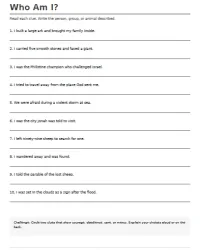
The Who Am I page offers ten clues about people, groups, a city, an animal, and a sign. Full answer lines provide writing room.
A final challenge asks learners to identify courage, obedience, care, or mercy and explain their choices.
The sequencing page covers Noah, David and Goliath, and Jonah. Learners number four mixed events in each section, then choose one account to read again and record a question.
Use the Read, Notice, Respond Sheet
The fifth activity page works with any Bible passage. Children write the passage or story title, then identify who appears, where and when the action happens, and which events matter most.
Two prompts encourage observation. Learners can record a repeated word, contrast, command, promise, question, or surprise. Their response might be a truth, question, prayer, or practical action.
Use this page for family reading, Sunday school, homeschool, or reflection. Younger children can answer aloud while an adult writes. Older children can work independently and discuss their notes.
How to Prepare and Use the Pages
Print on US Letter paper at 100 percent or Actual Size. Black-and-white formatting is ink-friendly, and the portrait pages fit folders or binders. Use pencils for writing and colored pencils to mark found words.
Choose pages that fit your lesson. Pair the Noah sequence with Genesis 6 through 9, or use the lost-sheep clues after Luke 15. Printed references make the connections easy to find.
Use the answer key for a quick check. For open-ended prompts, invite learners to explain how passage details support their thinking. This turns review into conversation without making the lesson feel like a test.
To extend the lesson, ask children to compare two characters’ choices or retell a story using the sequence boxes as a guide.
They can also write a new clue for a classmate, choose five words for a future puzzle, or use the observation page with next week’s passage. These variations encourage review without extra preparation.
Ideas for Home, Church, and School
For Sunday school, place one puzzle at each table as children arrive.
In children’s church, use the word search during transitions. Volunteers can keep copies ready for substitute teaching or extra time.
Homeschool families can spread the pages across several days. Read a story, complete one activity, and finish with the observation sheet.
During family devotionals, siblings can discuss the same passage at their own level.
FAQ
The activities are designed mainly for elementary-age children, especially ages seven through eleven. Strong younger readers may enjoy them with adult help, while older learners can use the puzzles as a quick review before discussing the open-ended prompts in greater depth.
No. The independently written clues and summaries avoid long quotations, so families and churches can use their preferred translation. Details were checked against the public-domain King James Version, but wording may differ slightly in another Bible without changing the intended answers.
The matching, word search, Who Am I, and sequencing activities have complete answers. The Think About It prompt and Read, Notice, Respond sheet are open-ended. Encourage children to explain their responses using details from the passage rather than looking for one required sentence.