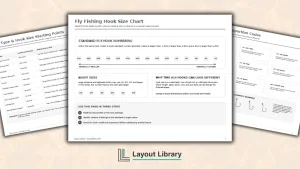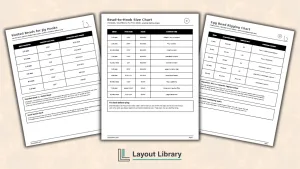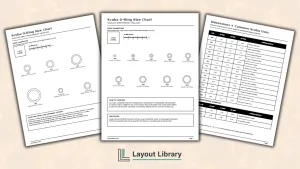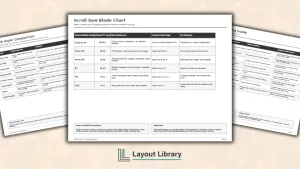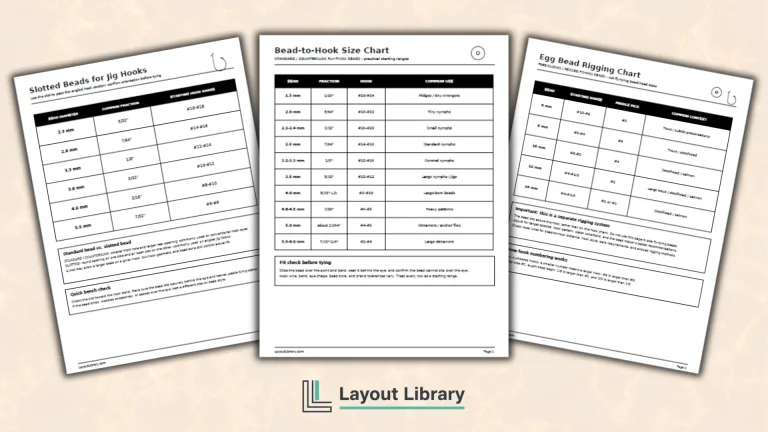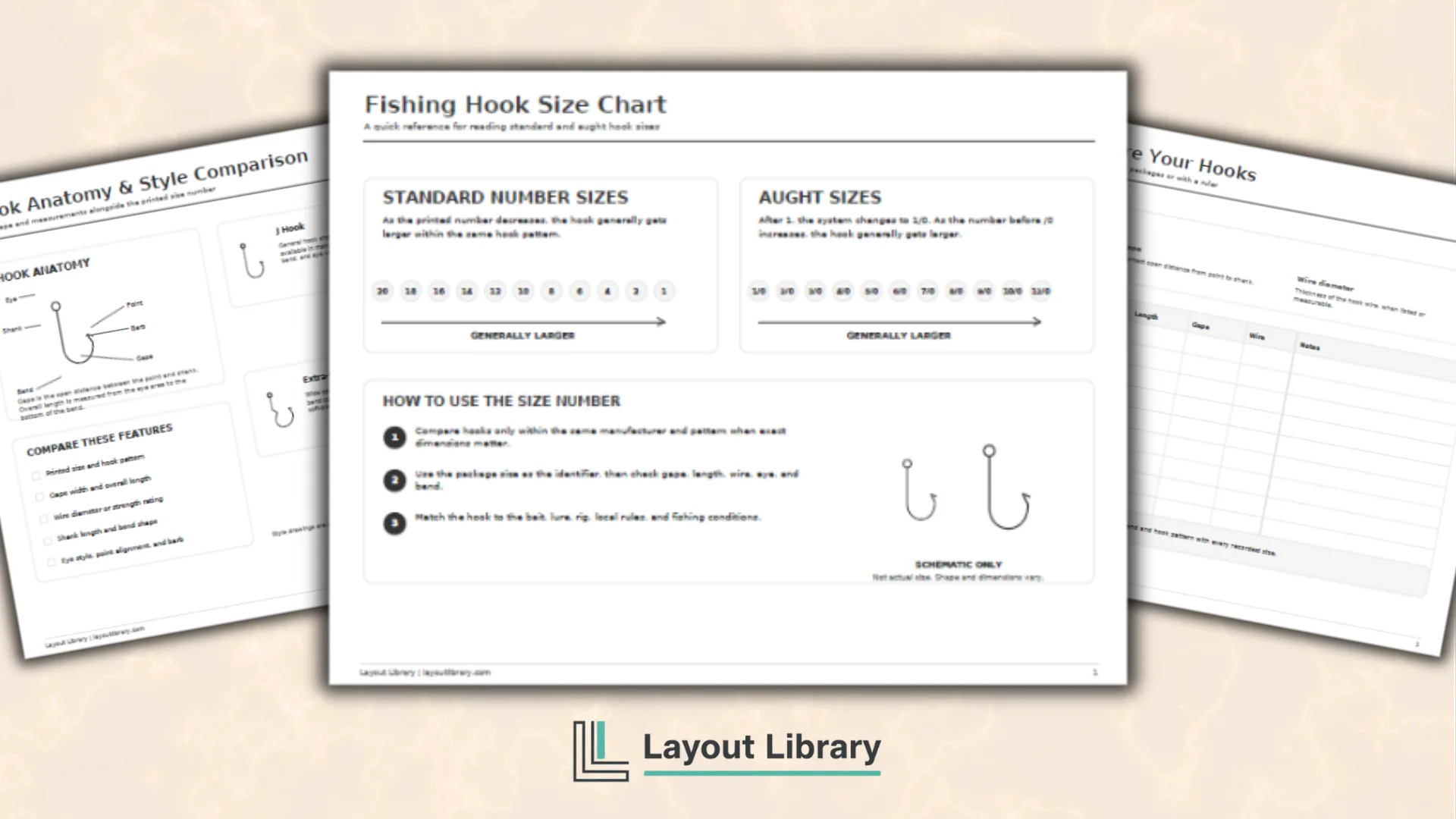
This Fishing Hook Size Chart explains standard and aught numbering, shows which details deserve comparison, and includes worksheets for recording the hooks you own.
Keep it near your tackle storage or use it while organizing gear for a trip.
Printable Details
Title: Fishing Hook Size Chart.
Used For: Hook size reference, tackle organization, trip planning, package comparison, inventory tracking.
Page Length: 5.
Paper Size: 11 × 8.5 in (landscape).
File Size: 55 KB.
File Type: PDF.
Color: Black & White.
License: Personal Use.
Image Gallery
At a Glance
A Clear Guide to Hook Sizing
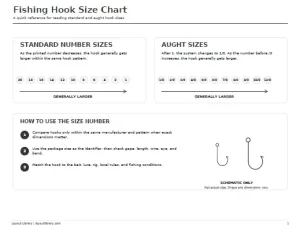
The first page separates the two numbering systems that often cause confusion. On the standard side, hooks generally become larger as the number moves down toward 1.
On the aught side, the direction changes: 1/0 is followed by 2/0, 3/0, and larger numbers as hook size generally increases.
Hook numbers identify sizes within a product line, but they do not guarantee one universal length or gape across manufacturers and patterns.
The schematic drawings reinforce the order without pretending to be true-size silhouettes.
What the Anatomy and Style Page Offers
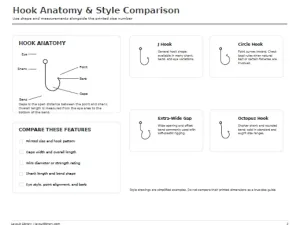
The second page helps you look beyond the number printed on a package. Its labeled J-hook diagram identifies the eye, shank, bend, point, barb, and gape.
A comparison checklist then gives you five features to inspect when two hooks carry similar size labels but look or perform differently.
The four small style cards show you simplified examples of a J hook, circle hook, extra-wide-gap hook, and octopus hook. Use these cards to identify the general shape in your tackle collection.
The short descriptions explain visible differences and practical context while leaving manufacturer-specific dimensions to the package or product chart.
How to Compare the Hooks You Own
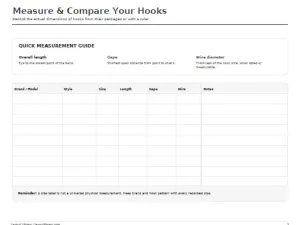
Use the third page when you want a personal size record based on actual hooks instead of generic assumptions. Begin with the brand or model and hook style.
Then copy the printed size from the package and add the overall length, gape, wire diameter, or other details that are available.
The measurement guide defines each field in plain language. Overall length runs from the eye area to the lowest part of the bend.
Gape is the open distance between the point and shank. Wire diameter records the thickness of the hook wire when the package lists it or you can measure it reliably.
Keeping brand and pattern beside every size makes the worksheet more useful. You can compare replacements, notice differences between similar labels, or build a reference for the hooks that fit your preferred baits, lures, and rigs.
Leave unused fields blank rather than estimating measurements.
Organize Your Tackle Box With the Inventory Page
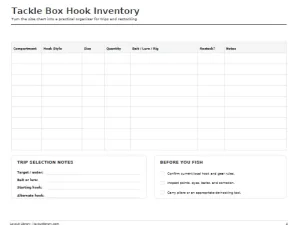
The fourth page of the printable turns the reference into a working tackle-box organizer.
Give each row a compartment number or location, then record the hook style, size, quantity, intended bait, lure, or rig, and any notes.
Mark the restock column when a supply is getting low.
Before a trip, use the planning boxes to note the target or water, bait or lure, a starting hook, and an alternate.
The checklist reminds you to review current local rules, inspect condition, and carry an appropriate de-hooking tool.
Supplies You May Need
Affiliate disclosure: Some links below are affiliate links. If you make a purchase, Layout Library may earn a commission at no extra cost to you.
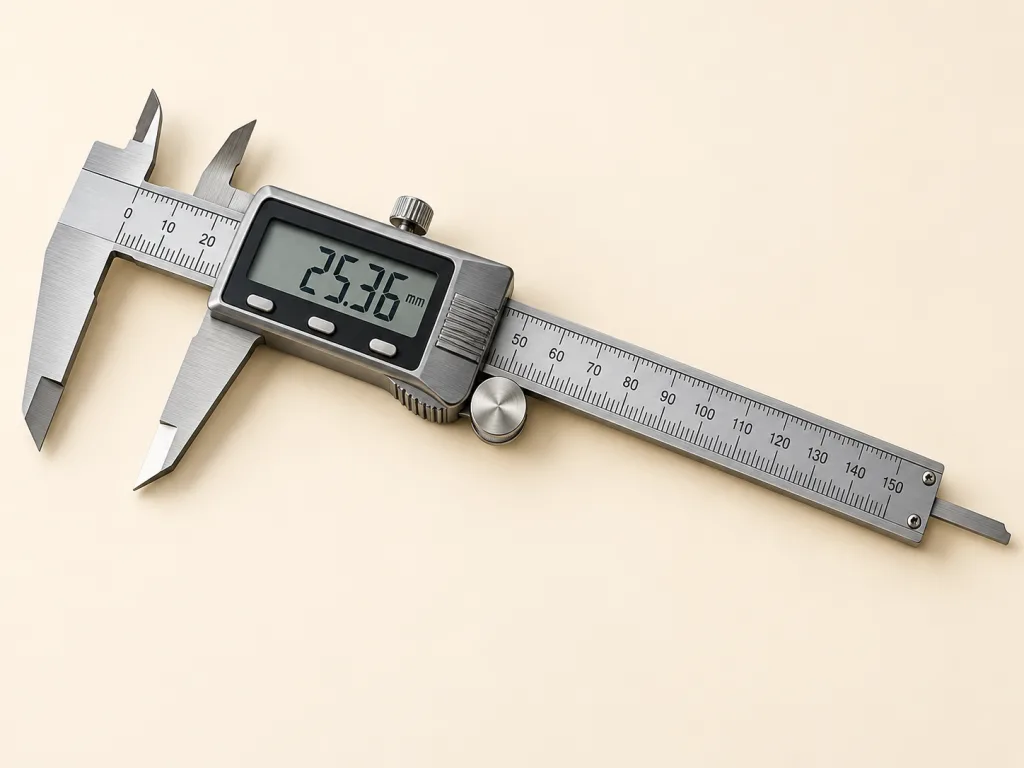
Digital Caliper
A digital caliper makes it easier to record actual hook length, gape, and wire thickness when building a reference for the hooks you own.
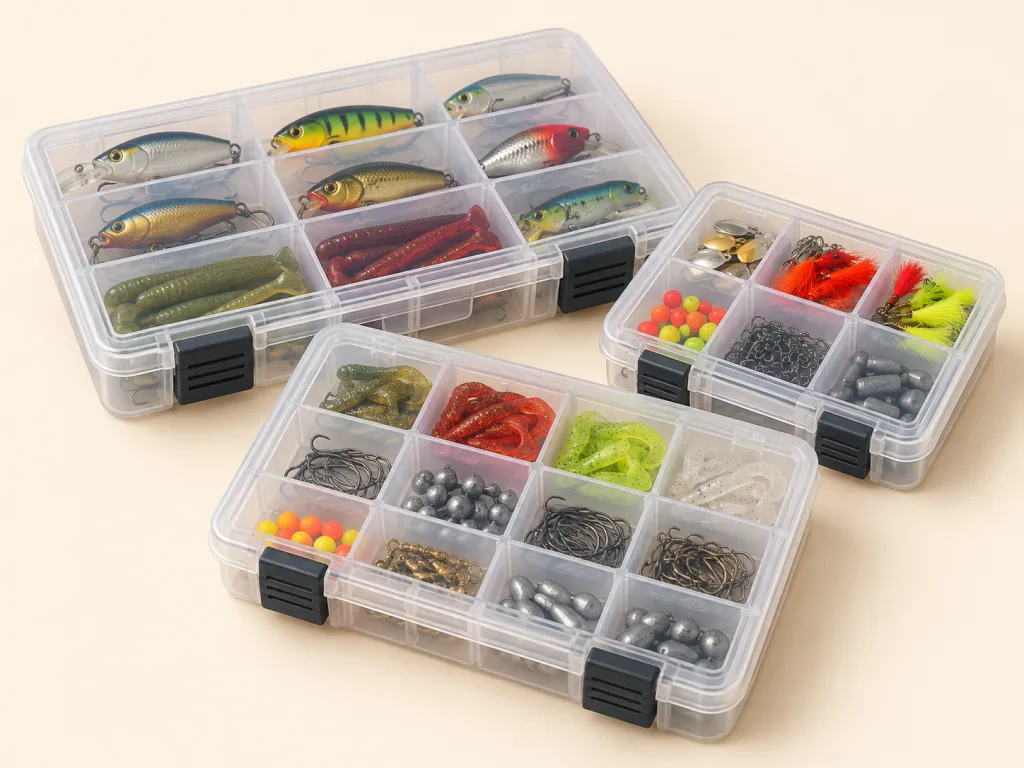
Tackle Organizer Set
A set of clear compartmented tackle organizers makes it easier to separate hooks by size and style while keeping your printable inventory organized across multiple boxes.
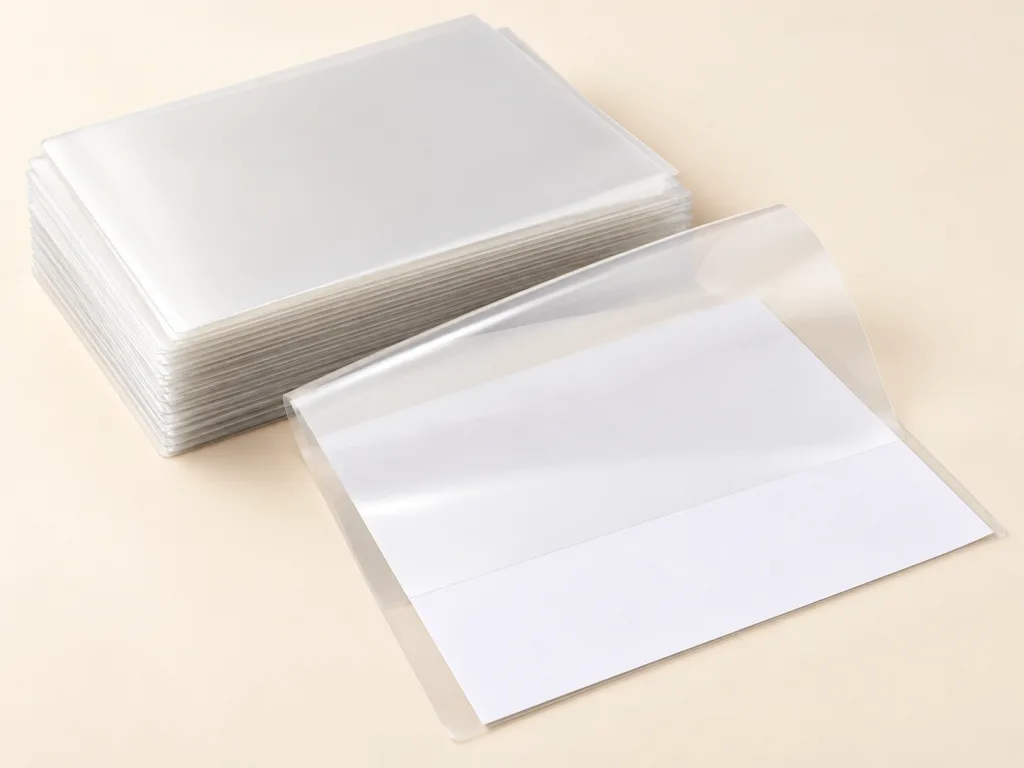
Laminating Pouches
Letter-size laminating pouches protect the reference pages from moisture and repeated handling around your tackle storage.
Printing and Reusing the Chart
Print the PDF on US Letter paper in landscape orientation at 100 percent scale.
Cardstock or lamination can make the first two reference pages more durable while the worksheet pages remain writable.
If you laminate a worksheet, use a suitable dry-erase or wet-erase marker and test it in a corner first.
You can also print extra copies of pages three and four whenever you add a tackle box, change a compartment layout, or prepare for a different type of fishing.