Planning a flag football offense?
This printable gives you ten 6-on-6 plays with clear diagrams that are easy to review at home, explain during practice, or keep nearby on game day.
The play sheets cover quick passes, crossing concepts, deep options, motion, and goal-line situations. A route key and blank design page help you teach and customize the concepts.
Printable Details
Title: 6-on-6 Flag Football Plays.
Used For: Coaching sessions, offensive planning, practices, player instruction, wristband preparation, game-day play calling.
Page Length: 8 pages.
Paper Size: 11 x 8.5 in (landscape).
File Size: 63 KB.
File Type: PDF.
Color: Black & White.
License: Personal Use.
Image Gallery
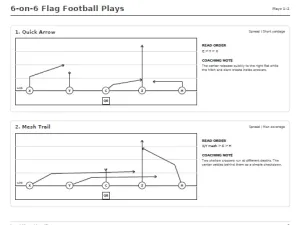
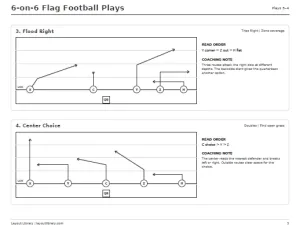
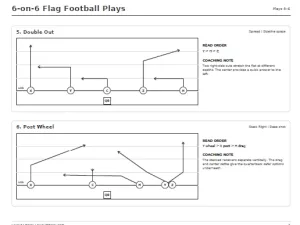
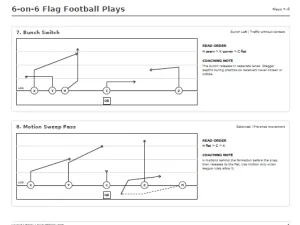
At a Glance
What’s Included in the Playbook
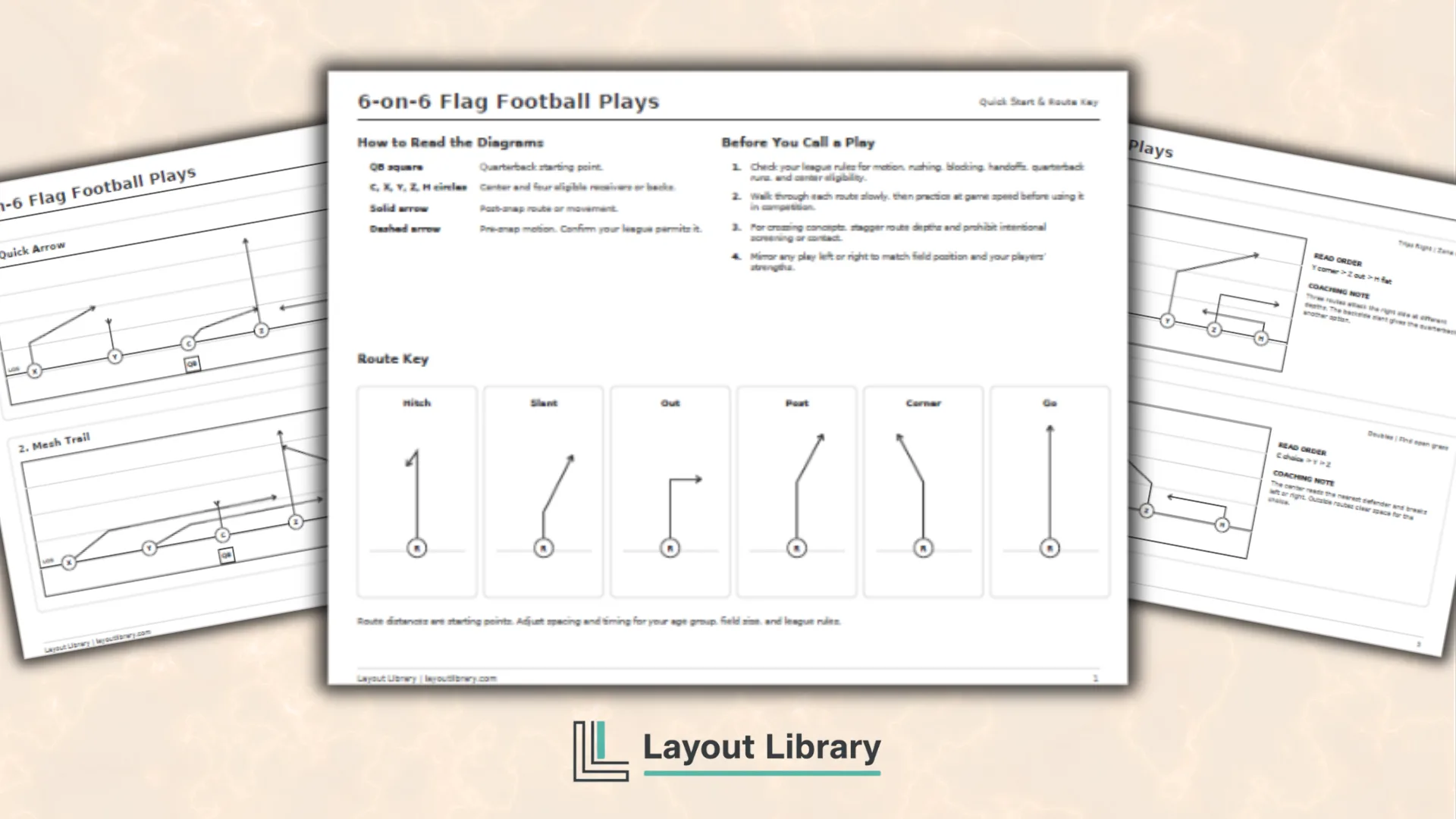
The Quick Start & Route Key page explains every symbol used throughout the PDF.
A square marks the quarterback, while circles identify the center and four eligible receivers or backs. Solid arrows show post-snap movement, and dashed arrows show pre-snap motion.
Six route cards show the basic shape of a hitch, slant, out, post, corner, and go route. Review them first so everyone understands the later diagrams.
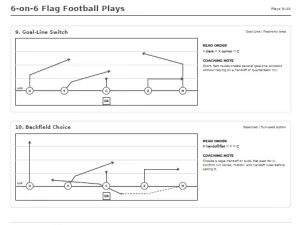
The next five pages contain two plays each. Every card names the formation and situation. The diagram shows all six starting positions, while the read order gives the quarterback a practical sequence.
The coaching note explains what each concept creates. Quick Arrow uses the center in the flat, while Flood Right attacks one side at several depths.
Choosing Plays for Practice and Games
Start with concepts that match your players’ skills. Quick Arrow, Double Out, and Goal-Line Switch use direct routes and simple reads for a dependable opening group.
Add Mesh Trail, Post Wheel, Bunch Switch, and Motion Sweep Pass after players can maintain spacing. Walk through the formation, practice without a defense, and then add game speed.
The diagrams can be mirrored. If open space is on the left, reverse every starting point and arrow. You can also change the player labels to match your terminology.
League rules are not identical. Before using Motion Sweep Pass or Backfield Choice, confirm whether your league permits motion, handoffs, quarterback runs, center releases, blocking, or screening.
For Mesh Trail and Bunch Switch, practice crossing routes at different depths so players do not collide or create intentional contact.
Using the Design Your Own Play Page
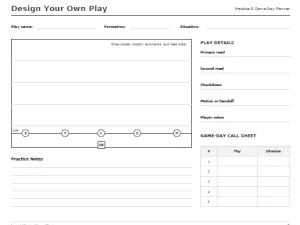
The Design Your Own Play page gives you a large blank field with all six offensive positions already marked. Draw the routes directly on the field, then add the play name, formation, situation, and read order in the spaces around it.
Use the Play Details fields to record the primary read, second read, checkdown, motion or handoff, and any player notes. These prompts make a custom diagram easier to teach because the purpose of each route stays connected to the drawing.
The small game-day call sheet holds five plays. Add the numbers and names you expect to use most, then write the situation for each one. This creates a short sideline menu without forcing you to search through every page between downs.
Supplies You May Need
Affiliate disclosure: Some links below are affiliate links. If you make a purchase, Layout Library may earn a commission at no extra cost to you.
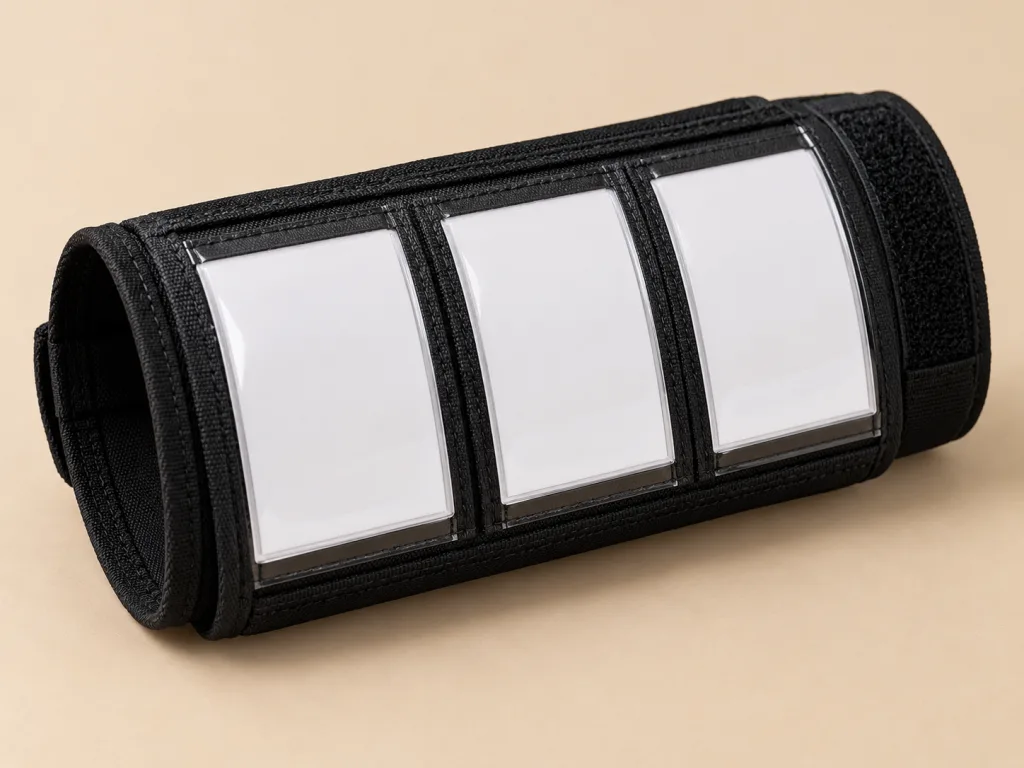
Football Play Wristbands
Keep a short play list visible on players’ wrists for quick reference during practices and games.
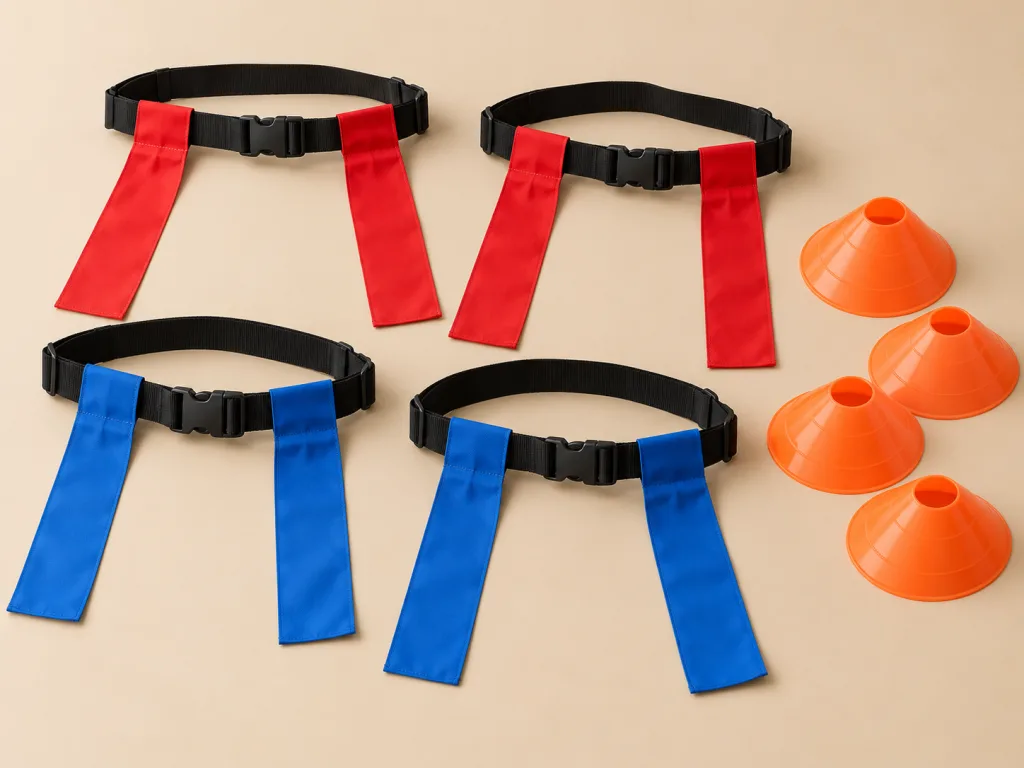
Flag Football Belt Set
Useful for practices, scrimmages, and games when you need adjustable belts, flags, and field markers.
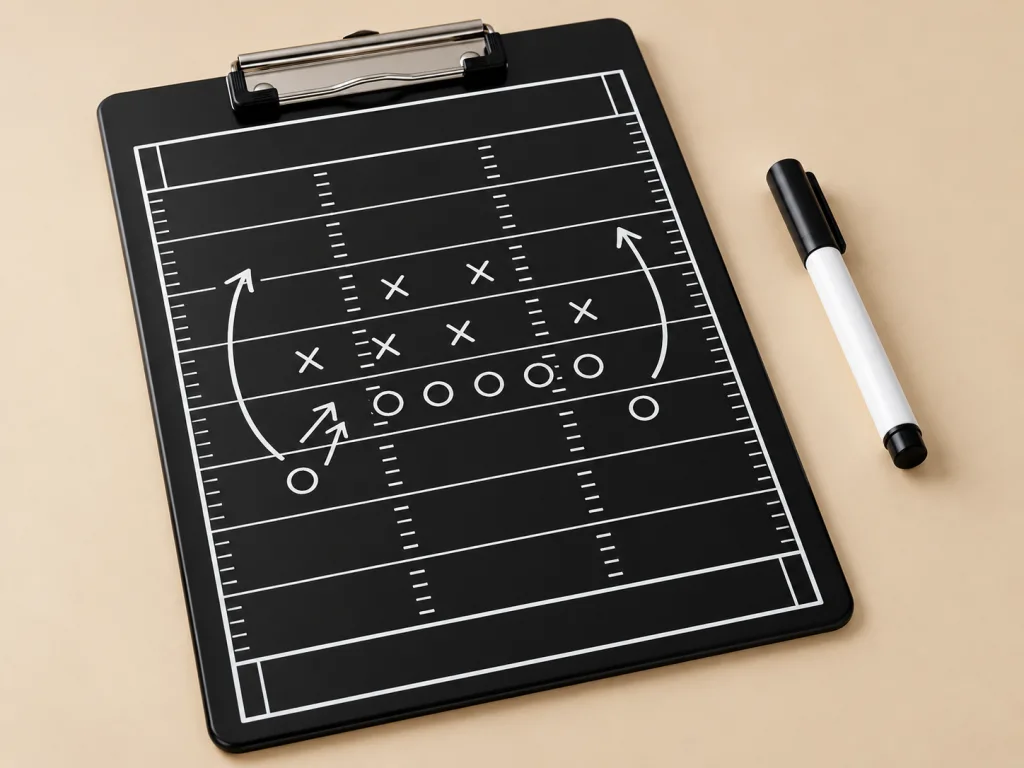
Football Coaching Clipboard
A reusable way to sketch adjustments, review formations, and explain routes on the sideline.
Printing and Organizing the Pages
Print in landscape orientation at actual size. Standard paper works for practice, while cardstock or a sheet protector makes a sturdier coach’s reference.
Keep the route key at the front, followed by the five play sheets and your completed design page.
If you use wristbands, copy the play names and numbers from the game-day call sheet into your wristband format rather than shrinking the full diagrams until they become hard to read.