Geocache logs have a simple job, but the right format makes a big difference.
A large cache may have room for a complete visitor logbook, while a micro container might only fit a narrow paper strip.
This free printable geocache log bundle gives you several practical sizes in one download, plus a separate page for recording your own finds.
Whether you are preparing a new cache, replacing a full or damp log, or organizing memories from a geocaching trip, you can print only the pages that fit your needs.
Printable Details
Title: Geocache Logs.
Used For: Cache visitor logs, replacement log sheets, micro-cache log strips, and personal find tracking.
Page Length: 6.
Paper Size: 8.5 × 11 in (portrait).
File Size: 52 KB.
File Type: PDF.
Color: Black & White.
License: Personal Use.
Image Gallery
At a Glance
Overview
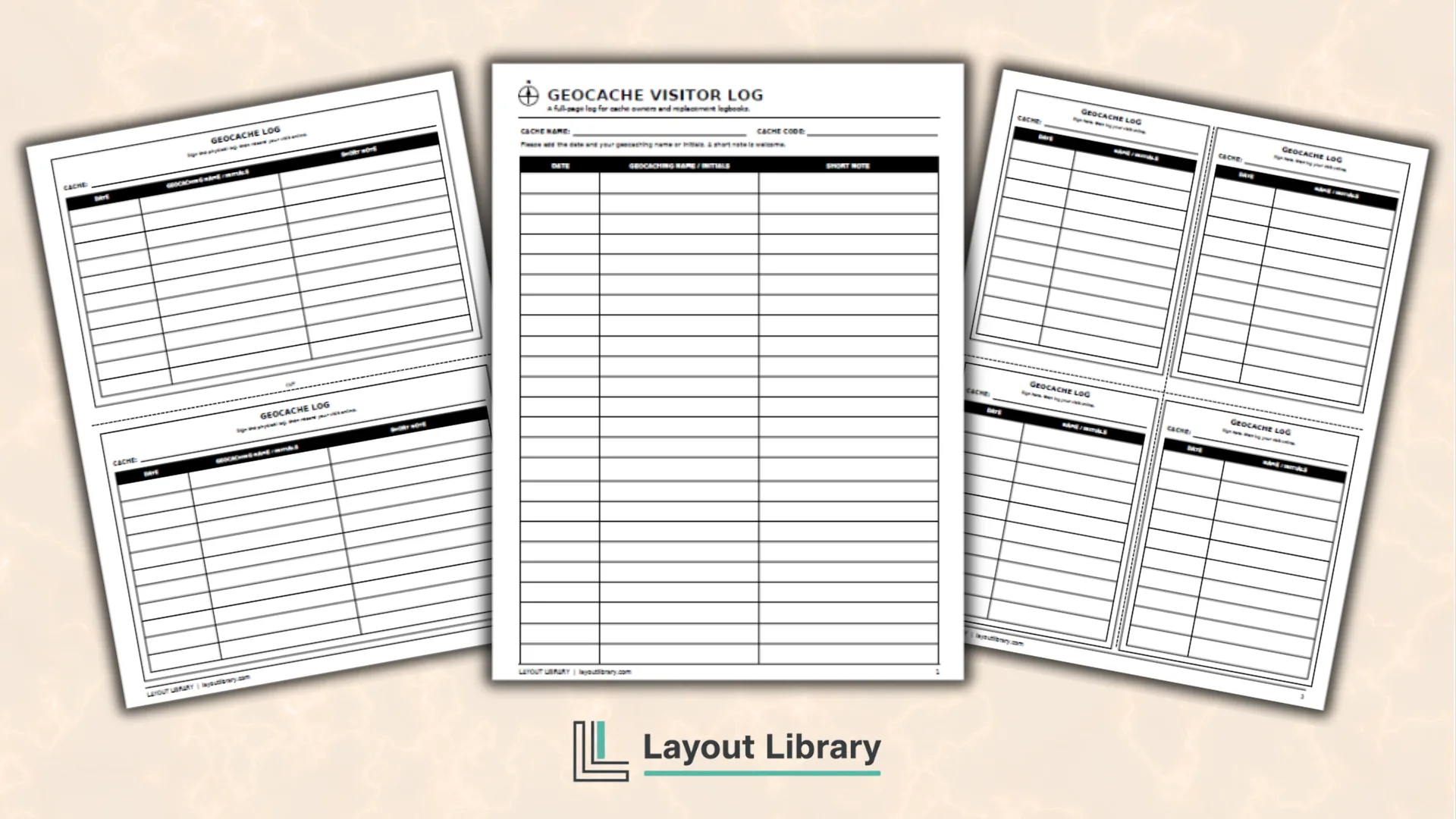
This printable includes four visitor-log layouts because geocache containers vary widely in size.
Each version gives finders a clear place to add the date and their geocaching name or initials. The larger versions also include a short-note column.
The bundle stays strictly black and white. That keeps printing inexpensive and makes it easy to create replacement copies at home, at work, or while preparing for a maintenance trip.
The simple tables also remain readable after folding or trimming.
What’s Included in This Geocache Log Bundle?
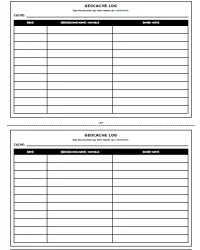
The first page is a full-page visitor log with 24 entries. It works well for larger containers, binders, or cache stations where writing space is not limited.
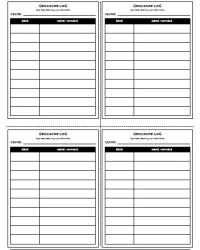
Page two contains two half-page logs with 11 entries each. Page three includes four quarter-page logs with 10 entries each. Both pages have dashed cutting guides to make trimming easier.
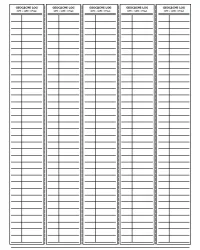
Page four provides five narrow micro-cache strips. Each strip has 34 compact rows for the date and a name or initials. These strips can be cut out and then folded or rolled after you confirm the available space inside the container.
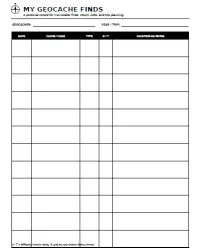
Page five is different from the visitor sheets. It is a personal geocache finds log with room for the date, cache name or code, type, difficulty and terrain rating, and location or notes.
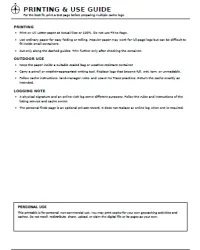
The final page includes printing directions, outdoor-use reminders, and personal-use terms.
Choosing the Right Log Size
Start with the container, not the number of entries.
Measure the usable interior space and account for any bag, pencil, trade items, or other contents. A log that technically fits may still be awkward to remove or return.
Use the full-page or half-page layout when people are likely to write a short message. The quarter-page format balances portability and writing room. The narrow strips are designed for very small containers where a signature and date are the priority.
If you are unsure, print one page on ordinary paper, cut out a single log, and test it before making extra copies.
Printing and Preparing the Logs
Download the PDF and select the page you want in your printer settings. Print on US Letter paper using Actual Size or 100%.
Avoid Fit to Page because scaling can change the intended log dimensions and cutting-guide placement.
Ordinary printer paper is usually easier to fold or roll than cardstock. Cut along the dashed guides, write the cache name or code in the header, and place the log in a suitable sealed bag or weather-resistant container. Cache owners may also want to keep extra printed sheets in a maintenance kit.
Replace any log that becomes full, wet, torn, or difficult to read. When maintaining a cache, follow the applicable land-manager rules, cache instructions, and Leave No Trace practices.