Keeping several spare O-rings in a save-a-dive kit is smart, but a collection of tiny black rings can become difficult to identify quickly.
This free printable O-ring size chart gives scuba divers an organized way to compare common sizes, review nominal measurements, and record the exact replacement information for their equipment.
The pPDF is designed as a practical starting point rather than a repair manual.
Its true-size outlines can help narrow down a possible size, while the dimension table and inventory log make it easier to confirm the correct part before it goes into a regulator, valve, hose, inflator, computer, light, or other piece of dive gear.
Printable Details
Title: O-Ring Size Chart.
Used For: Comparing common scuba O-ring sizes, recording part specifications, and organizing spare O-rings..
Page Length: 5.
Paper Size: 8.5 × 11 in (portrait).
File Size: 56 KB.
File Type: PDF.
Color: Black & White.
License: Personal Use.
Image Gallery
At a Glance
Overview
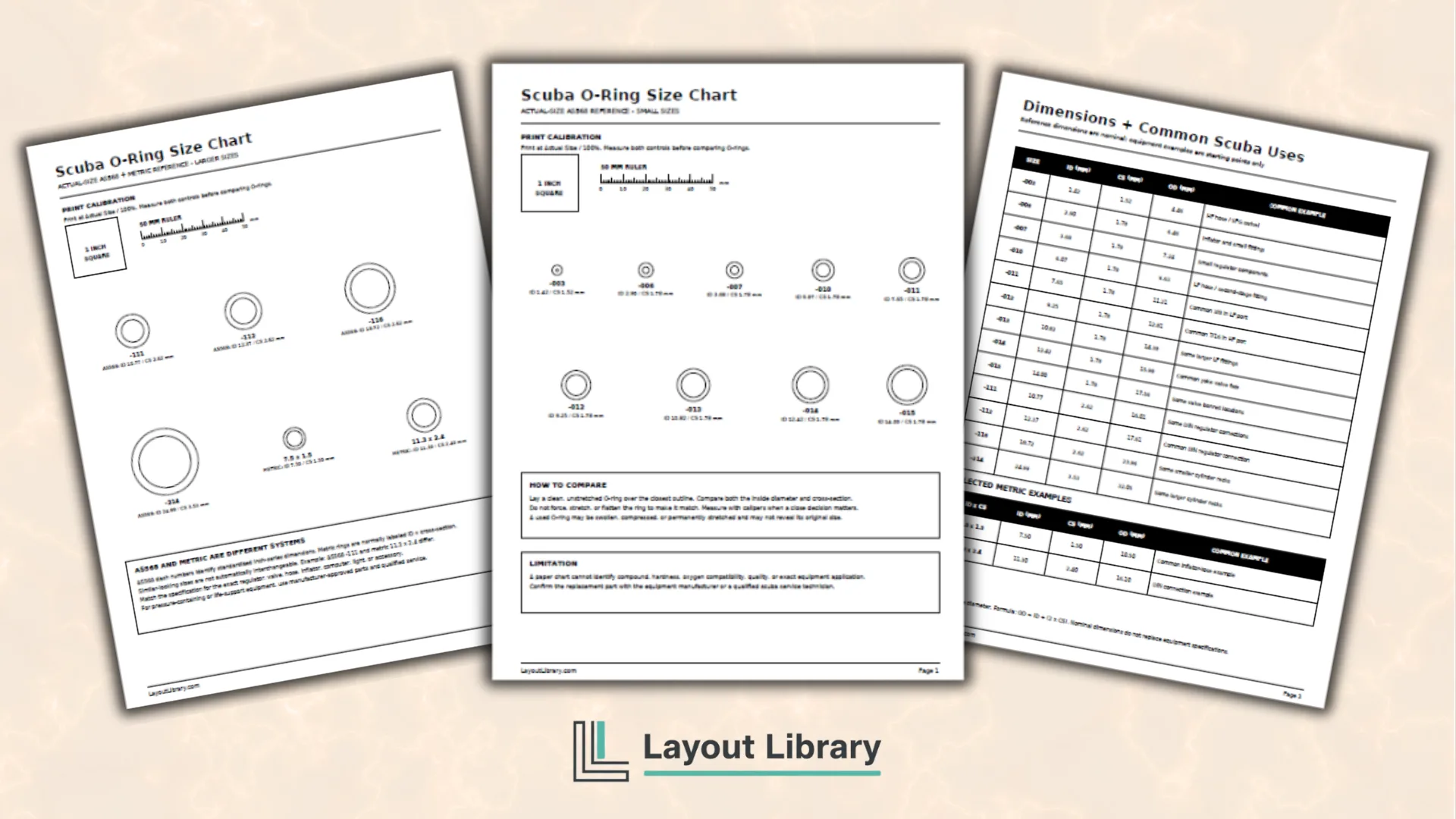
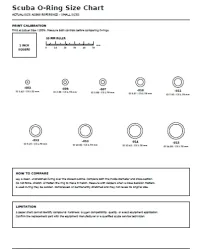
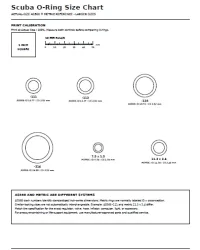
This five-page printable combines a visual chart, technical reference, and simple organization worksheet. Pages 1 and 2 display true-size O-ring outlines.
The first page focuses on smaller AS568 sizes, while the second covers larger AS568 examples and two metric sizes that divers may encounter.
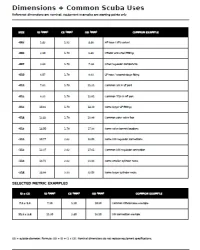
Page 3 lists nominal inside diameter, cross-section, and calculated outside diameter in millimeters. It also shows common scuba applications for each size.
These examples help orient the user, but scuba brands and individual models do not always use the same O-ring in the same location.
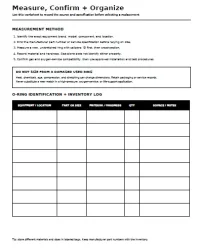
Page 4 explains a safer identification process and includes an eight-row inventory log.
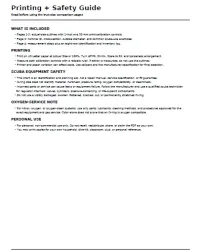
Page 5 provides printing instructions, essential limitations, oxygen-service guidance, and personal-use terms.
How to Print the Actual-Size Pages
The visual outlines are only useful when the printer preserves the original page scale. Select Actual Size or 100% in the print dialog.
Turn off settings such as Fit, Shrink Oversized Pages, Scale to Fit, or borderless enlargement.
After printing, measure the calibration square with a reliable ruler. It must be exactly 1 inch wide and 1 inch tall. Then check that the ruler runs exactly 50 mm from zero to 50.
If either control is inaccurate, do not use the printed circles for comparison. Printer drivers, browser print tools, and paper handling can all introduce small changes.
For a closer comparison, place a clean, unstretched O-ring over the nearest outline. Check the inside opening and the thickness of the ring. Do not pull or flatten it to force a match.
Understanding the Measurements
O-rings are usually described with three measurements:
- ID means inside diameter.
- CS means cross-section, or the thickness of the ring.
- OD means outside diameter.
Outside diameter is calculated with the formula OD = ID + (2 x CS). The chart keeps AS568 and metric labeling separate because similar dimensions do not automatically make two rings interchangeable.
A used O-ring may also be a poor measuring sample. Age, heat, chemicals, pressure, stretching, and compression can change its shape.
Whenever possible, identify the replacement through the equipment manual, an approved service kit, original packaging, or the manufacturer part number.
How to Use the Inventory Log
The final worksheet can turn a mixed bag of spare parts into a more useful dive-kit reference.
Add the equipment brand and model, component location, part number or size, material, hardness, quantity, and purchasing source. Store each type in its own labeled bag and keep the log with your save-a-dive supplies.
This makes it easier to restock known parts without guessing. It also gives a dive shop or qualified technician better information when you need help confirming a replacement.
Important Safety Note: O-ring color does not prove its material or oxygen compatibility.
For nitrox, oxygen, or oxygen-clean systems, use only approved parts, lubricants, cleaning methods, and procedures for the exact equipment and gas service. Never substitute a near match in a high-pressure or life-support application.
This printable is for personal, non-commercial use. You may print copies for your own household, dive kit, classroom, or club reference, but you may not resell or redistribute the PDF.