Choosing a bead for a fishing hook can feel less straightforward than it should.
Beads may be labeled in millimeters, fractions of an inch, or both, while hook numbers run in the opposite direction many beginners expect.
The right pairing also changes depending on whether you are tying a bead-head fly, using a slotted bead on a jig hook, or rigging an egg-style bead above the hook.
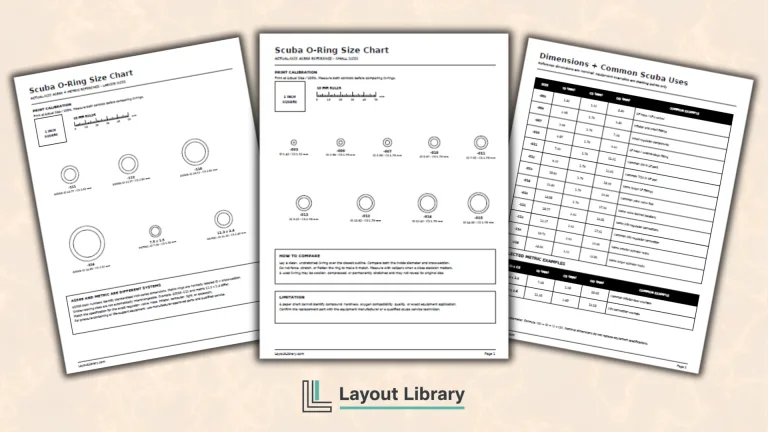
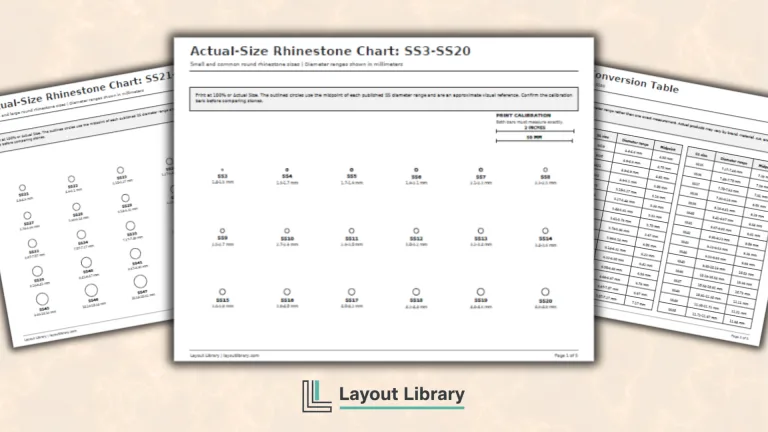
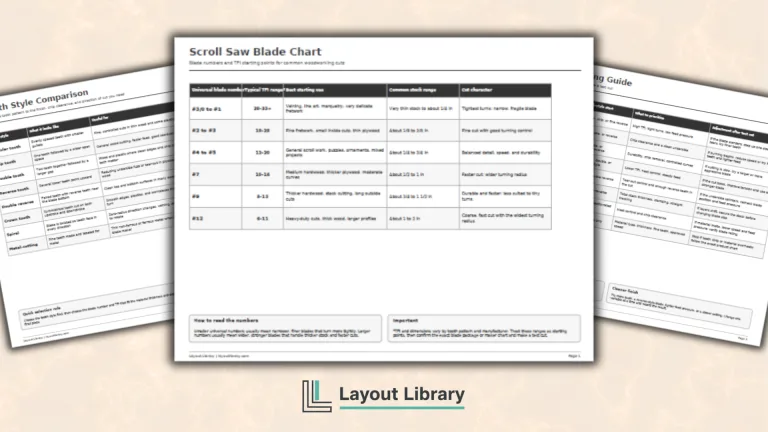
This free printable bead-to-hook size chart organizes those systems into separate, easy-to-scan pages.
Keep the set near your fly-tying bench, slip a copy into your tackle box, or use the blank log to record the combinations that fit your favorite brands.
Printable Details
Title: Bead-to-Hook Size Chart.
Used For: Fly tying, egg bead rigging, tackle preparation, and fishing reference.
Page Length: 5.
Paper Size: 8.5 × 11 in (portrait).
File Size: 52 KB.
File Type: PDF.
Color: Black & White.
License: Personal Use.
Image Gallery
At a Glance
Overview
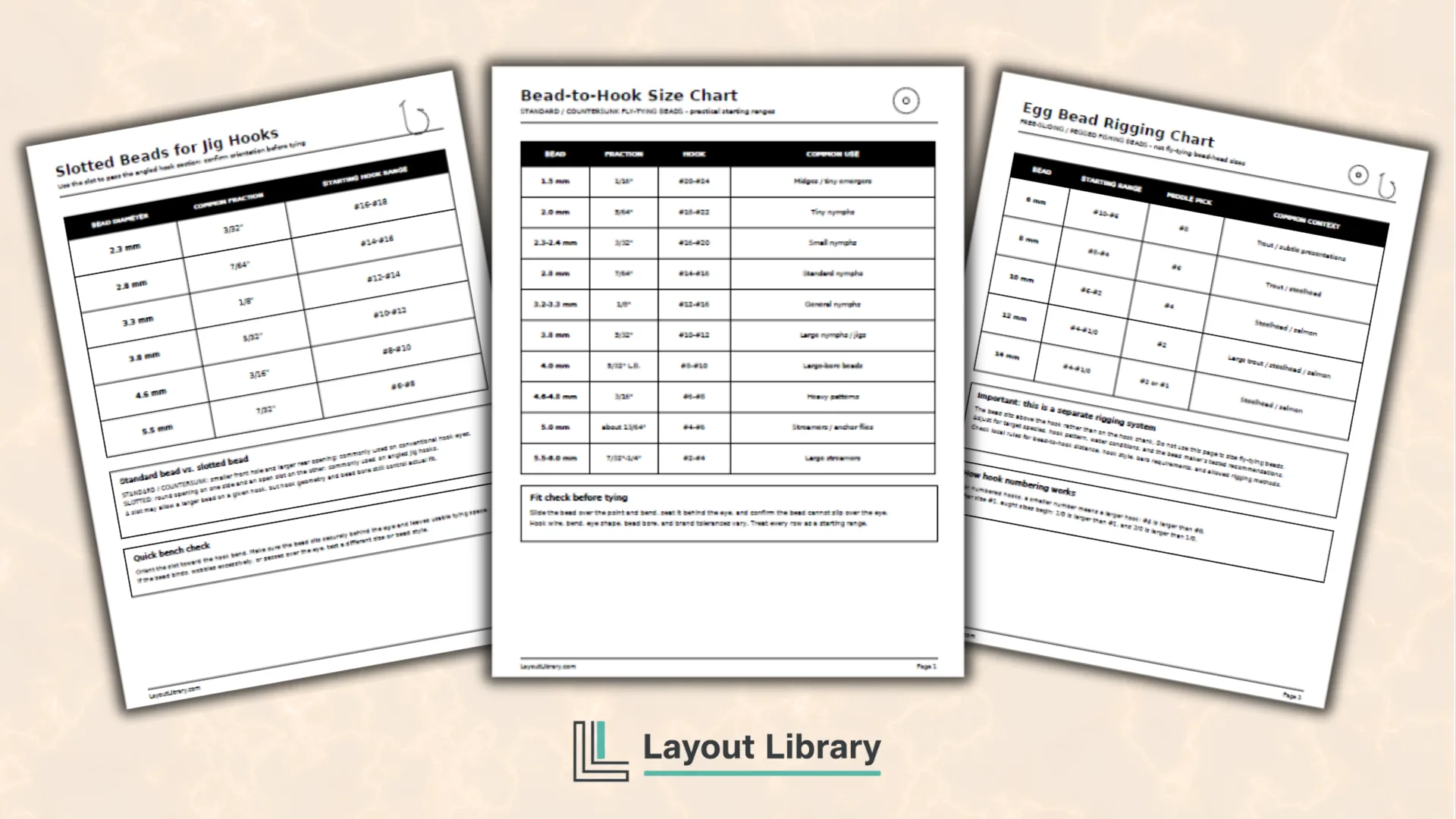
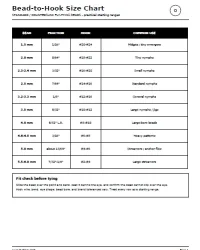
The printable includes four working reference pages and one printing and personal-use page. Page one covers standard or countersunk fly-tying beads from 1.5 to 6 millimeters.
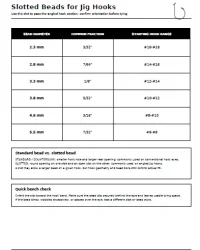
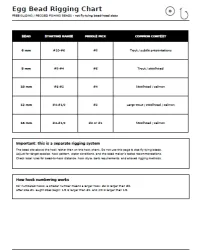
Page two focuses on slotted beads commonly paired with angled jig hooks. Page three is reserved for 6 to 14 millimeter egg-style beads that sit above a separate hook.
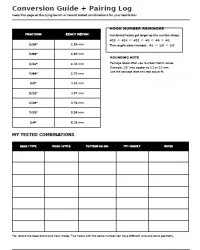
Page four combines a fraction-to-metric conversion chart with a seven-row log for tested combinations.
Keeping these methods separate matters. A 6-millimeter fly-tying bead is a large bead-head component, while a 6-millimeter egg bead is often paired with a separate hook in a drifting presentation. They should not share one sizing recommendation.
Using the Fly-Tying Charts
Start by identifying the bead style. A standard or countersunk bead generally has a smaller front opening and a wider rear opening.
It is commonly placed on a conventional hook and seated behind the eye. A slotted bead has an open channel that helps it move around the angled section of a jig hook.
Find the bead diameter on the appropriate page, then review the suggested hook range. When several sizes are listed, the middle size is a sensible first test.
Slide the bead over the hook point and bend, seat it behind the eye, and make sure it cannot pass over the eye. The bead should also leave enough room for the fly you plan to tie.
The chart is a starting reference rather than a universal fit promise. Hook wire thickness, bend shape, eye dimensions, bead bore, and manufacturing tolerances can all change the result.
Using the Egg Bead Rigging Chart
The egg bead page covers a different fishing setup. In this method, the bead is fixed or allowed to move on the leader above a separate hook.
The chart provides starting ranges for common bead sizes from 6 to 14 millimeters and identifies a useful middle choice for each range.
Use the recommendation as one factor in your setup. Target species, fish size, hook pattern, water clarity, presentation, and manufacturer guidance may point you toward a larger or smaller hook.
Local fishing regulations can also govern bead-to-hook distance, barbs, hook styles, and legal rigging methods. Check the current rules for the water you plan to fish.
Metric and Fractional Bead Sizes
Bead packages often show rounded conversions. For example, a one-eighth-inch bead is exactly 3.175 millimeters but may be sold as either 3.2 or 3.3 millimeters.
The conversion page shows exact mathematical equivalents for nine common fractional sizes, helping you recognize labels that refer to nearly the same diameter.
Do not treat the printed circle icons as physical measuring templates. Printer scaling and display settings can change their size. Read the package label or use calipers when an exact measurement matters.
Printing and Organizing the Pages
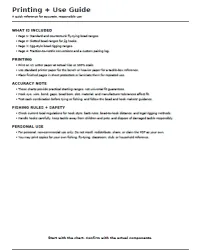
Print the PDF on US Letter paper using Actual Size or 100% scale. Standard printer paper works well at a tying bench.
Heavier paper, a sheet protector, or lamination is more durable for a tackle bag.
You can print the full packet or select individual pages in your printer settings. Add notes to the pairing log whenever you test a new combination.
Recording the bead type, hook model, pattern or rig, and result will gradually turn the printable into a personalized reference.