Anxiety can feel difficult to explain when thoughts, body sensations, and stressful situations overlap.
Writing down a few details can make those experiences easier to notice.
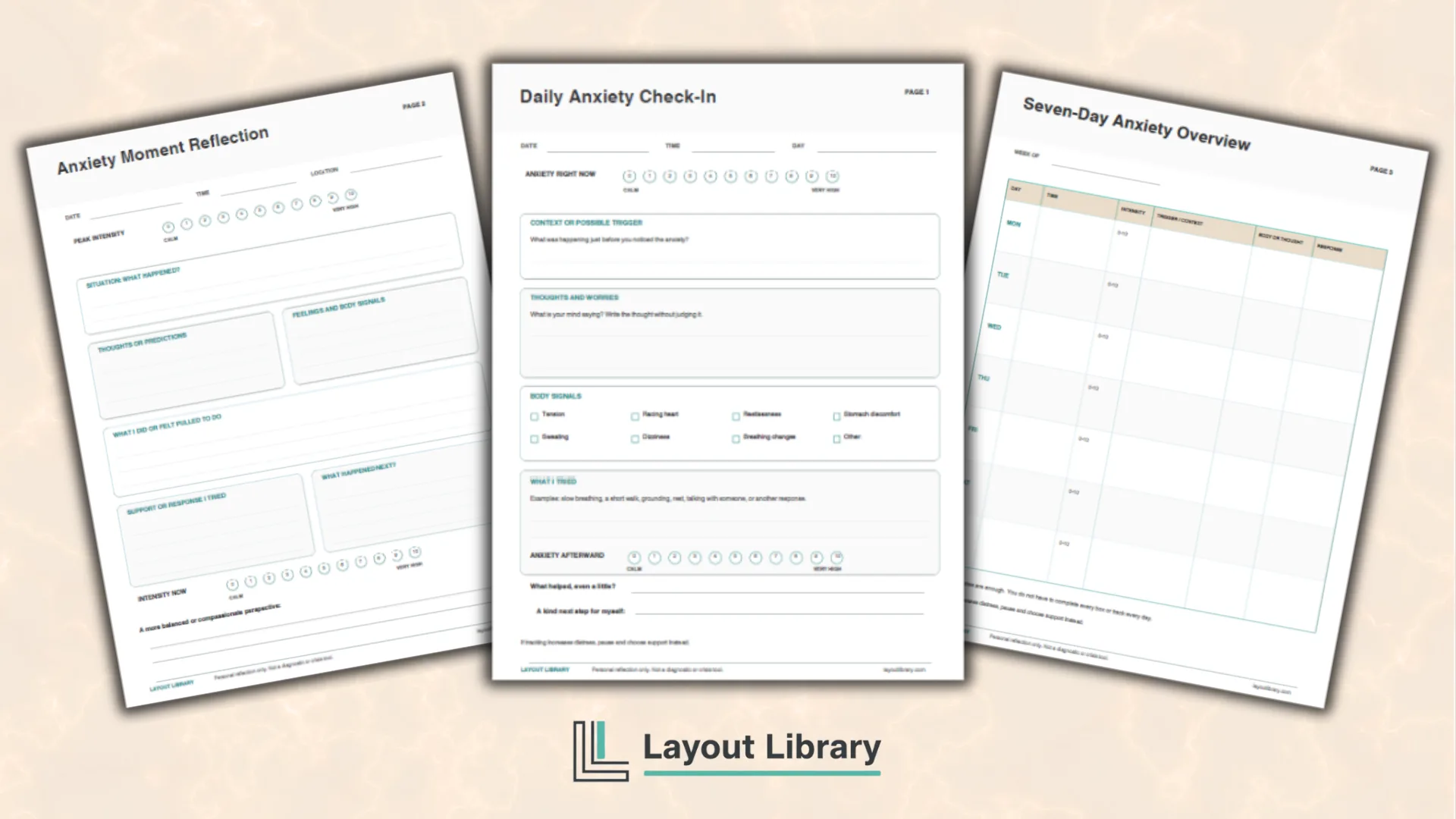
This free printable anxiety tracker gives you several gentle ways to record what happened, how intense the feeling was, what you noticed, and what seemed to help.
Use one page or the full packet, depending on the amount of structure you want.
Printable Details
Title: Anxiety Tracker.
Includes: Daily check-in, anxiety-moment reflection, seven-day overview, weekly review, and safety information.
Intended use: Personal reflection and journaling only.
Page Length: 5.
Paper Size: 8.5 × 11 in (portrait).
File Size: 624 KB.
File Type: PDF.
Color: RGB.
License: Personal Use.
Image Gallery
At a Glance
Overview
The printable supports observation, not diagnosis.
It includes detailed and compact formats so you can match the page to your needs. You do not need to complete every prompt or track every day.
Each active page includes a short reminder that tracking can be paused.
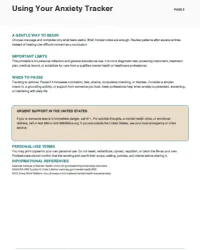
The final page explains the limits of the printable, when professional support may be appropriate, and where people in the United States can find urgent crisis support.
What’s Included in This Anxiety Tracker?
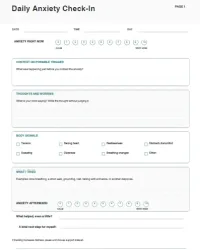
Daily Anxiety Check-In
The daily page begins with a 0-to-10 intensity scale, then provides space for the possible context or trigger, current thoughts, body signals, and the response you tried.
A second intensity scale helps you notice whether anything shifted. There is also room to record what helped and choose one kind, next step.
The numbers are descriptive, not a score you need to improve. They simply offer a consistent way to compare your own experiences over time.
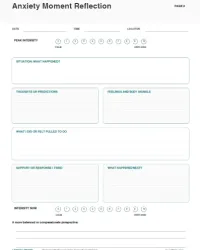
Anxiety Moment Reflection
This page focuses on one particular anxious moment. It separates the situation, thoughts or predictions, feelings and body signals, actions or urges, support used, and what happened next.
The final prompt invites a more balanced or compassionate perspective without demanding that you dismiss a real concern.
Seven-Day Overview
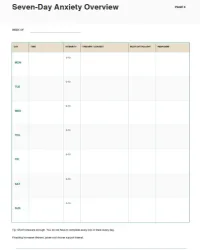
The weekly log offers one row for each day. It works well for brief notes about time, intensity, context, a body or thought pattern, and your response. Short phrases are enough. Leaving a day blank is also completely fine.
Weekly Pattern Review
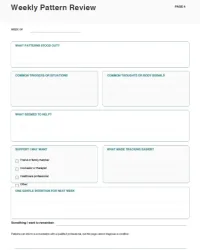
After several entries, use the review page to notice repeated situations, thoughts, sensations, or helpful responses.
It also provides space to identify support you may want and choose one gentle intention for the coming week. A pattern is information to explore, not proof of a diagnosis.
How to Use This Tracker
Download the PDF and print the pages you want at 100% or Actual Size. Keep blank copies in a journal, planner, binder, or private folder. Start with the simplest format that feels useful.
Try writing in neutral language. For example, record “heart felt fast during the meeting” rather than judging the reaction.
Note what happened before the anxiety, what your mind predicted, and what you did afterward. Over time, you may see contexts that often appear together or responses that make a difficult moment feel more manageable.
Store completed pages securely and share them only with people you choose.
Disclaimer: Important Mental Health and Safety Note
This printable is a general self-reflection tool. It is not a diagnostic test, clinical screening, treatment plan, medical record, or replacement for a mental health or healthcare professional.
Anxiety symptoms can affect daily life, and professional support may be appropriate when they are persistent, worsening, or interfering with work, school, relationships, sleep, or routine activities.
If tracking makes you feel more distressed or encourages repetitive checking, stop using it. Choose immediate support or a grounding activity instead.
In the United States, call or text 988 for suicidal thoughts, a mental health crisis, or emotional distress. Call 911 if there is immediate danger. Outside the United States, use the local emergency or crisis service.