
Understanding rhythm is one of the most important parts of learning music. If time signatures feel confusing or overwhelming, this free printable Time Signature Chart breaks everything down in a simple, visual way that makes sense.
This printable is designed for beginners, students, teachers, parents, and anyone learning music theory for the first time. It explains what time signatures mean, how to count them, and where you commonly hear each one.
Printable Details
Title: Time Signature Chart
Used For: Music Theory, Rhythm Practice, Music Education, Piano Lessons, Band, and Choir
Page Length: 5
Paper Size: 8.5 × 11 in (portrait)
File Size: 734 KB
File Type: PDF
Color: Black & White
License: Personal Use
Image Gallery
At a Glance
Overview
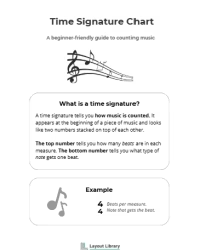
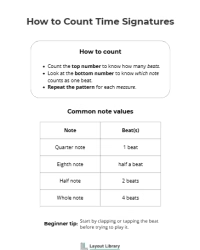
A time signature tells you how music is counted. It appears at the beginning of a piece of music and helps musicians understand how many beats are in each measure and which note gets the beat.
This Time Signature Chart is designed as a clear reference guide, not a dense theory lesson. Each page focuses on clarity, visual organization, and real-world use so learners can quickly understand what they are seeing and how to count it.
The printable includes:
- A plain-English explanation of what time signatures are.
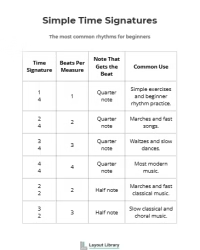
- Simple time signatures like 2/4, 3/4, and 4/4.
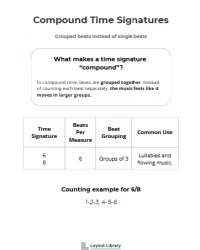
- Compound time signatures like 6/8.
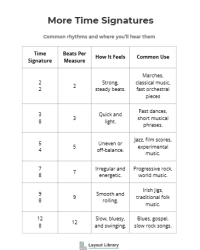
- An expanded reference list of additional common time signatures and where they are used.
- Easy counting tips for beginners.
This makes it ideal for students, homeschoolers, private lessons, and classroom settings.
How to Use This Printable
You can use this Time Signature Chart in many practical ways:
- As a reference sheet during piano, guitar, or band practice.
- For music theory lessons or rhythm units.
- In homeschool music curricula.
- As a classroom handout for elementary or middle school music.
- For quick review before rehearsals.
- To help parents support music practice at home.
It works well printed, placed in a binder, or kept near an instrument.
Tips for Best Results
- Print at 100 percent scale for best readability.
- Use standard white paper for clear contrast.
- Keep this chart nearby during practice sessions.
- Start by clapping or tapping the beat before playing.
- Focus on one time signature at a time to avoid overwhelm.